

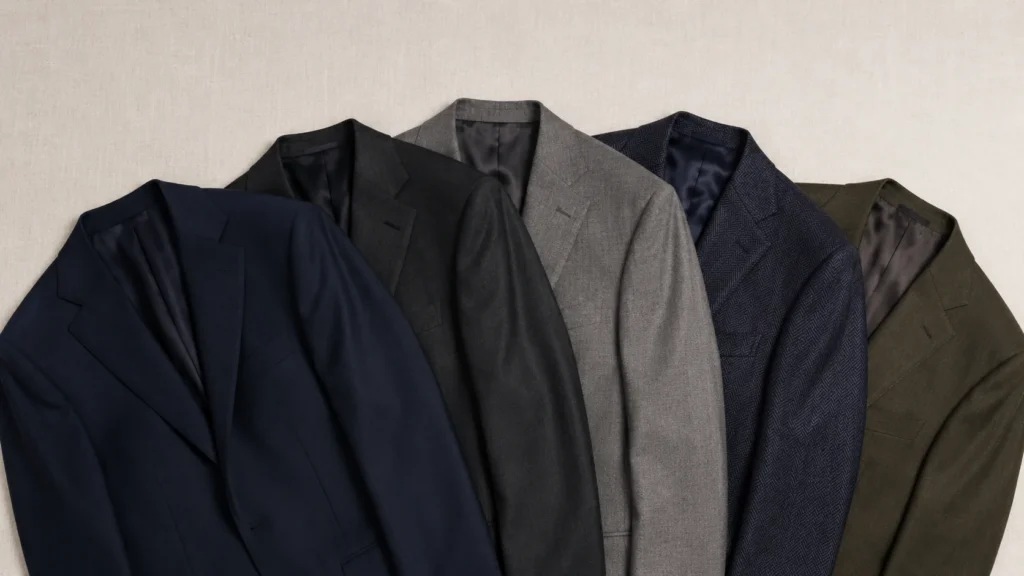
Color is the first thing anyone notices about a suit — often before they register the fit, the fabric, or anything else. And unlike fit or fabric, color sends a message before you’ve said a word. Understanding which colors do what is one of the simplest ways to make your wardrobe work harder for you.
The Research Behind Suit Color
A study published in the Journal of Business Research found that blue increases perceptions of trustworthiness by 42% in professional service contexts. — Bethany Works, Color Psychology for Financial Services Brands, 2025 [source]
A 2021 behavioral study on professional attire found that darker-toned suits — deep navy and charcoal — produced significantly higher trust ratings from observers than lighter-colored suits of the exact same cut. — Color Institute, The Power of Color Psychology in Business & Leadership, 2025 [source]
The takeaway isn’t that you need to wear navy every day for the rest of your career. It’s that color is a tool — and like any tool, it works best when you understand what it’s actually doing.
Navy: The Foundation
Navy is the closest thing to a universal professional color in America. It reads as trustworthy without being severe, formal without being cold, and it photographs well — a real consideration for anyone who appears on video calls, in headshots, or at events. If you own only one suit, it should be navy.
Charcoal and Mid-Gray: The Workhorses
Charcoal sits just below navy in versatility but offers a slightly more serious, slightly more formal register — useful for situations where you want to project additional gravitas: board meetings, depositions, year-end reviews. Mid-gray, meanwhile, is the most weather-flexible of the core colors and pairs easily with both formal and business-casual elements, making it ideal for climates with real seasonal swings.
Beyond the Basics: Standing Out Intentionally

Because navy is so common, some color research suggests that in certain settings — sales, creative industries, networking events — a well-chosen alternative like olive, burgundy, or deep brown can actually work harder than another navy suit simply because it’s memorable. As one analysis on professional color psychology put it, the ubiquity of navy means it no longer offers any competitive advantage in rooms where everyone else is wearing it too.
This doesn’t mean abandoning navy — it means having one or two alternative colors in your rotation for moments when standing out, in a controlled and intentional way, works in your favor.
Building a Five-Suit Color Rotation
For most professionals, a wardrobe built around these five tones covers nearly every situation:
- Navy — the default for client meetings, interviews, and everyday professional wear
- Charcoal — for high-stakes meetings, formal presentations, and evening events
- Mid-gray — the most season-flexible option, works in both warm and cool months
- A textured navy or gray (birdseye, sharkskin, herringbone) — same color family, more visual interest
- One differentiator — olive, burgundy, or deep brown for situations where memorability matters
Why Custom Makes Color Decisions Easier
Off-the-rack retailers offer color in a handful of preset options, often limited by what a manufacturer overproduced. With custom suiting, color isn’t limited to what’s on the rack — it’s chosen from full mill swatch books, in the exact fabric weight and finish that suits your climate and how often you’ll wear the piece. The color decision and the fit decision happen together, which is exactly how they should be made.
Not sure which colors your wardrobe is missing? Get started at jbdclothiers.com.