
You’re invited to a client meeting. Your manager says, “business formal.” Last week, someone mentioned the office was “business casual.” Are they different? And if so—how different?
For working professionals in DC and Maryland, understanding dress codes matters. Your appearance signals respect, professionalism, and attention to detail. Yet most men struggle to distinguish between them, and getting it wrong can undermine your credibility in the room.
After 20+ years tailoring suits for lawyers, accountants, consultants, and government professionals, I’ve seen this confusion firsthand. This guide breaks down both styles, shows you exactly what to wear, and clarifies when each is appropriate—especially for DC/MD work environments.
The Quick Answer
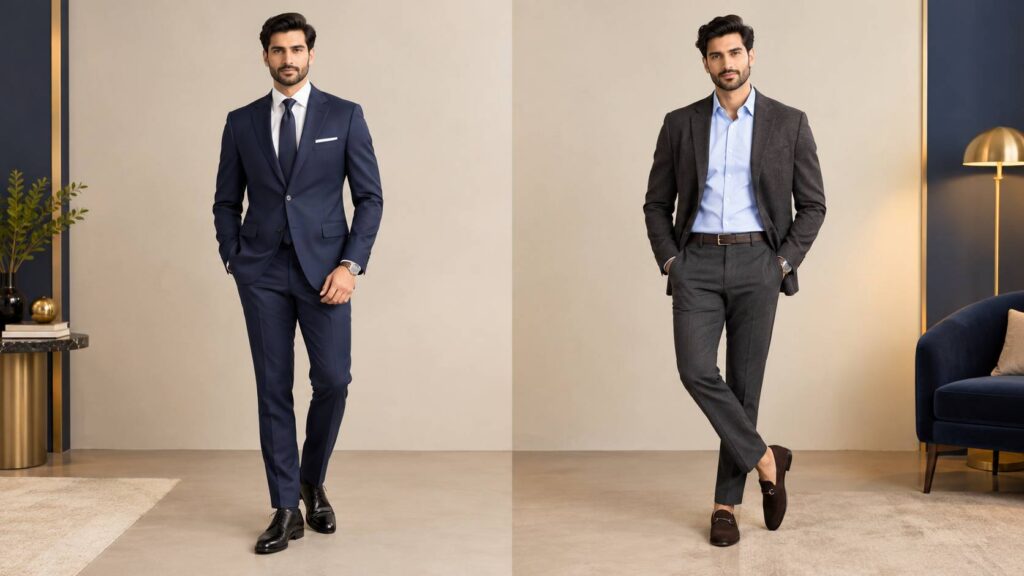
Business Formal = Complete suit + dress shirt + tie + polished leather shoes. Required for client meetings, courtrooms, and formal business settings.
Business Casual = Dress pants/chinos + button-down shirt (no tie) + optional blazer + professional shoes. Standard for internal meetings and collaborative work.
The rule: When in doubt, dress one level more formal. It’s easier to remove a tie than to explain why you’re underdressed.
The Formality Spectrum
Think of business attire on a spectrum:
Casual ← Less Formal | More Formal → Business Formal
- Casual: Jeans, T-shirt, sneakers
- Business Casual: Chinos/dress pants, button-down, no tie
- Business Formal: Suit, dress shirt, tie
Business casual sits between everyday casual and full formality. Business formal is the professional peak.
Quick Comparison Table
| Element | Business Formal | Business Casual |
|---|---|---|
| Jacket | Complete matching suit (required) | Blazer (optional but recommended) |
| Shirt | White or light blue dress shirt | Button-down (any professional color) |
| Tie | Required | Not worn |
| Pants | Dark dress pants (matching jacket) | Chinos or dress pants |
| Shoes | Black or brown leather (polished) | Leather loafers or dress shoes |
| Socks | Dark, matching trousers | Neutral or subtle pattern |
| Accessories | Minimal (watch, belt) | Minimal (watch, belt) |
| Jeans | Never | Only if explicitly approved |
| Sneakers | Never | Only premium leather sneakers |
The Decision Framework: Two Simple Tests
The Jacket Test
- Business Formal: You MUST wear a complete suit (jacket + matching trousers)
- Business Casual: A blazer is optional but elevates the look
The Tie Test
- Business Formal: You MUST wear a tie
- Business Casual: No tie needed
If you’re unsure which to wear, wear the suit with the tie. You can always remove it if you notice everyone else is more relaxed.
Business Formal: Complete Breakdown
Schedule Free Consultation Now
The Suit
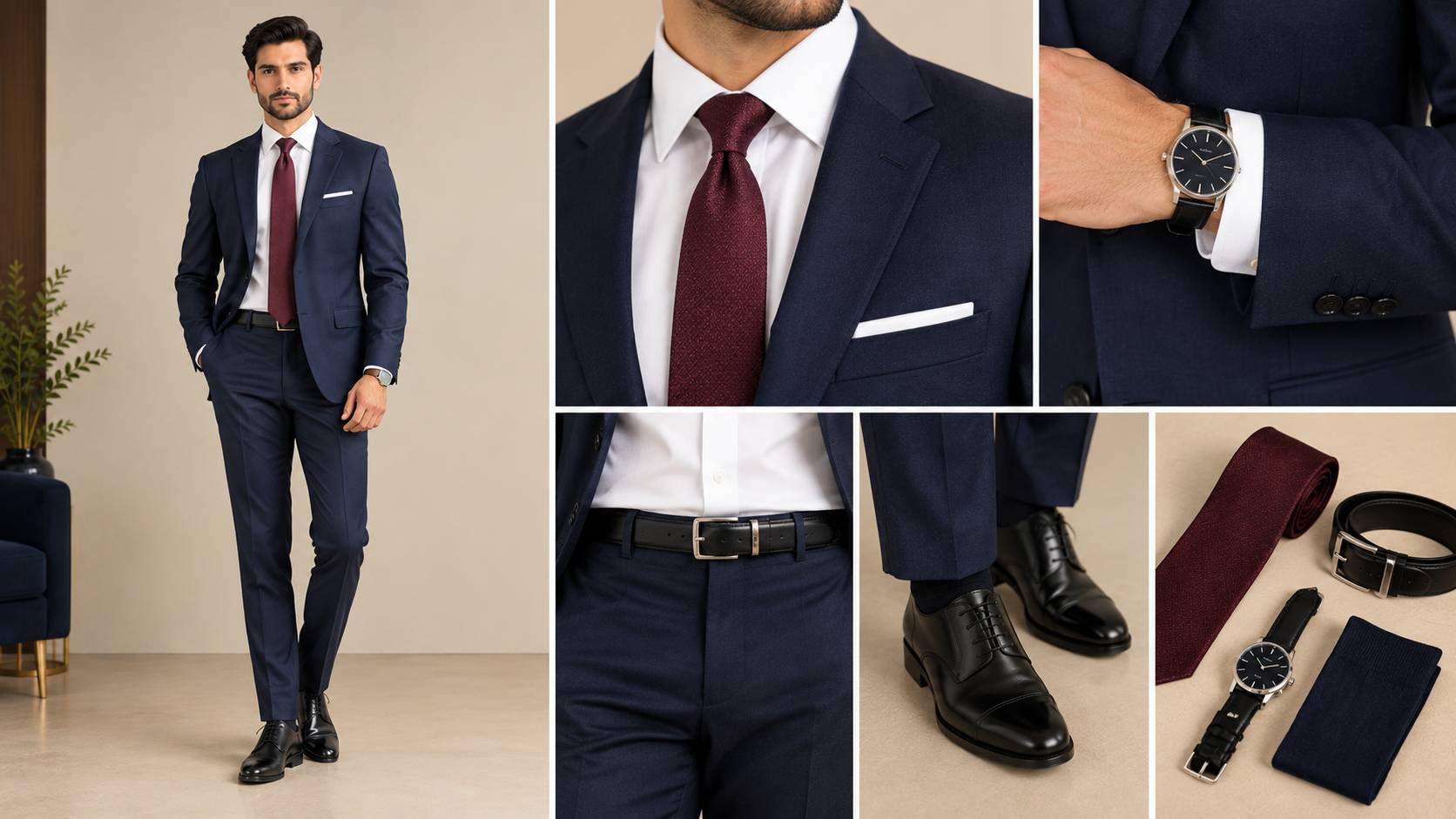
The foundation. It must be a complete matching set—jacket and trousers in the same fabric and color.
Best colors: Navy (most versatile), charcoal gray, black, dark brown.
Critical detail: Fit matters more than brand. Poor fit (gapping collar, tight shoulders, long sleeves) undermines any suit, no matter the price.
The Dress Shirt
White is standard. Light blue works as a secondary option, but white is always the safe choice for client meetings.
Requirements: Long sleeves, crisp and pressed, clean and well-maintained condition, properly fitted.
The Tie
A tie is non-negotiable in business formal.
Best colors: Navy, burgundy, dark gray, black.
Best patterns: Solid or thin stripes. Avoid novelty ties and loud patterns.
Fit: Tie should end at your belt buckle. Too short looks sloppy. Too long looks careless.
Shoes & Accessories
- Shoes: Black or dark brown leather dress shoes. Must be polished and clean.
- Styles: Oxfords, brogues, or conservative loafers
- Belt: Leather, matching your shoes
- Socks: Dark (black, navy, charcoal), reaching your calf
- Watch: Simple, understated, leather-strap or minimal metal
- Pocket square: Optional but shows intention. White, burgundy, or subtle pattern.
Business Casual: Complete Breakdown
The Jacket (Optional)
A blazer is not required but strongly recommended. It instantly elevates the look.
Best colors: Navy, charcoal gray, brown.
The Shirt
No tie required. This is the key difference.
Best options:
- Button-down shirt (long-sleeved, pressed)
- Polo shirt (professional and slightly relaxed)
- Lightweight sweater (merino wool or cotton)
Colors: Light blue, white, light gray, light purple, subtle stripes. Avoid bright or dark colors.
Pants
No suit required. This is the second key difference.
Best choices:
- Chinos (navy, charcoal, khaki, olive)
- Dress pants (gray, navy, charcoal)
- Dark premium denim (only if explicitly approved)
Avoid: Light colors, distressed denim, shorts, athletic wear.
Shoes & Accessories
- Shoes: Loafers, brogues, dress shoes, or premium leather sneakers
- Belt: Leather, matching your shoes
- Socks: Neutral (black, gray, navy) or subtle patterns
- Watch: Simple, understated
- Jewelry: Minimal. One watch, maybe a ring.
- Industry-Specific Guidance for DC & Maryland
- Law Firms & Courtrooms
Expectation: Business formal is standard, even for internal work.
Why? Courtrooms require formal attire. According to the American Bar Association, professional appearance is central to courtroom conduct and client expectations.
What to wear: A complete suit, white shirt, tie, and polished leather shoes.
Financial Services & Banking
Expectation: Business formal for client-facing roles. Business casual for internal teams.
Why? Client trust is paramount. Conservative dress signals stability.
Tech & Government Agencies
Expectation: Business casual to business formal, depending on department and role.
Why? Some agencies are conservative (State Department = business formal). Others are relaxed (tech-focused = business casual).
Default: Business casual with a blazer unless explicitly told otherwise.
When to Wear Each Style
Business Formal:
- Client meetings and presentations
- Job interviews
- Courtroom appearances
- Board meetings
- Executive leadership positions
- Formal corporate events
Business Casual:
- Internal office meetings
- Collaborative team work
- Remote meetings (chest-up professional)
- Casual corporate events
- Roles without direct client contact
- Most modern offices (unless industry requires formal)
When Unsure: Ask your manager. Check your employee handbook. Observe what senior colleagues wear. When still unsure, choose business formal.
Common Mistakes to Avoid
Mistake 1: Poor fit
An expensive suit that doesn’t fit looks worse than an affordable suit that fits perfectly. Poor fit (gapping collar, tight shoulders, bunching) undermines everything.
Fix: Get your suit tailored or invest in a custom suit.
Mistake 2: Wrinkled or stained clothing
Wrinkles and stains signal carelessness.
Fix: Press your shirt before wearing. Check for stains.
Mistake 3: Scuffed or dirty shoes
Clean shoes are non-negotiable. Worn-out shoes ruin any outfit.
Fix: Polish your shoes before important meetings.
Mistake 4: Wrong attire for the setting
Wearing business casual to a client meeting or business formal to a casual startup signals you don’t understand context.
Fix: Confirm the dress code. When unsure, lean formal.
The Fit Factor: Why It Matters Most
Here’s what most men don’t realize: Off-the-rack suits are designed for average proportions. If you have broad shoulders, a narrow waist, long arms, or any variation, an off-the-rack suit will disappoint.
According to the Professional Tailors Association, proper fit is what separates intentional dressing from default dressing.
Signs of poor fit:
- Collar gaps when buttoned
- Tight or pulling shoulders
- Sleeves too long or too short
- Jacket bunching at the sides
- Trousers too baggy or too tight
For DC and Maryland professionals who wear business formal regularly, investing in a properly tailored suit ensures you look intentional in every client meeting and executive role.
Final Thoughts
The difference between business formal and business casual is simpler than most men think:
Business Formal = Complete suit + white shirt + tie + polished shoes. For client-facing roles and formal settings.
Business Casual = Pants/chinos + button-down shirt (no tie) + optional blazer. For internal work and modern offices.
The real investment isn’t buying more clothes. It’s ensuring what you do buy fits perfectly. A custom suit tailored to your frame communicates professionalism more effectively than any off-the-rack option.
When you show up in properly fitted clothing, you’re saying: “I respect this meeting. I respect the people here. I respect myself.”
That message matters.
Schedule Free Consultation Now
Frequently Asked Questions
Can I wear a blazer without a full suit in business formal?
No. Business formal requires a complete matching suit (jacket + trousers). A blazer with different trousers reads as business casual.
What if I’m unsure about my company’s dress code?
Ask your manager or check the employee handbook. If still unsure, wear business casual with a blazer.
Can I wear sneakers in business casual?
Only premium leather sneakers in modern offices. Athletic or casual sneakers are not appropriate.
What’s the difference between a blazer and a suit jacket?
A suit jacket is tailored to match specific trousers. A blazer is a standalone jacket worn with separate pants. Business formal requires a suit. Business casual can use either.
Should I invest in a custom suit or rent one?
If you wear suits 2-3+ times per month, a custom suit is worth the investment. If you need a suit for occasional events, renting is practical.
How do I know if my suit fits?
A good fit means: shoulders sit naturally, sleeves end at your wrist with a slight bend, the jacket closes comfortably, and trousers are straight through the thigh with a slight taper.