

Navigating modern workplace dress codes can often feel like walking a tightrope. Traditional corporate environments once made morning decisions easy: a dark suit, a crisp white shirt, and a conservative tie. Today, however, the professional landscape has shifted dramatically toward a more flexible aesthetic. Mastering business casual for men requires balancing professionalism with everyday comfort, looking put-together without appearing overly stiff or underdressed.
Whether you’re stepping into a hybrid office, attending a client networking event, updating your everyday wardrobe, or investing in custom suits tailored to your style, this guide breaks down everything you need to know about business casual for men.
What Is Business Casual For Men?
Schedule Free Consultation Now
At its core, what is business casual for men comes down to a deliberate balance between structured corporate tailoring and relaxed everyday wear. According to research published in the Journal of Fashion Marketing and Management, professionals strategically use attire to communicate personal competence while signaling adaptability within dynamic workplace cultures. It is a dress code that eliminates the strict requirement of a matching two-piece suit and necktie, while keeping graphic tees, distressed denim, and athletic wear firmly off the table.
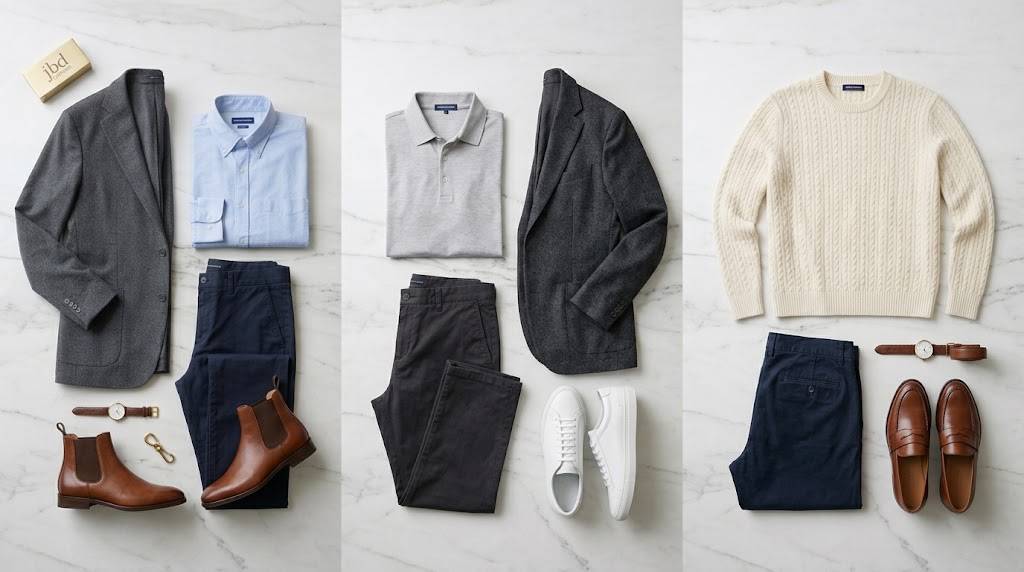
- The High End: An unstructured blazer, tailored trousers, an open-collar dress shirt, and leather penny loafers.
- The Relaxed End: A fine-gauge merino wool sweater or collared Oxford shirt paired with sharp chinos and clean leather dress shoes.
The primary goal of business casual for men is to communicate competence, attention to detail, and respect for your work environment while allowing room for comfort and personal expression.
Core Building Blocks of Business Casual Attire For Men
Building a reliable wardrobe begins with versatile foundational pieces. When putting together smart business casual attire for men, focus on clean silhouettes, high-quality fabrics, and neutral color palettes like navy, charcoal, olive, khaki, and light blue.
1. Shirts & Knitwear
Your choice of top anchors your entire look. Key staples include:
- Oxford Cloth Button-Downs (OCBDs): The ultimate foundation for business casual attire for men. They offer structure while feeling slightly more casual than formal dress shirts.
- Dress Shirts: Solid white, pale blue, or subtle pattern checks look sleek when worn open-collared under a sweater or blazer.
- Refined Polo Shirts: High-quality piqué or merino wool polos in neutral tones work excellently during warm seasons.
- Fine-Gauge Sweaters: V-necks, crewnecks, and quarter-zips layered over a button-down offer dynamic sophistication during cooler months.
2. Trousers & Pants
Ditch the matching suit pants in favor of tailored separates:
- Chinos: Flat-front chinos in navy, khaki, or dark grey form the backbone of business casual dress for men.
- Tailored Wool Trousers: Perfect for higher-stakes meetings where you need extra polish.
Selecting the Best Business Casual Shoes For Men
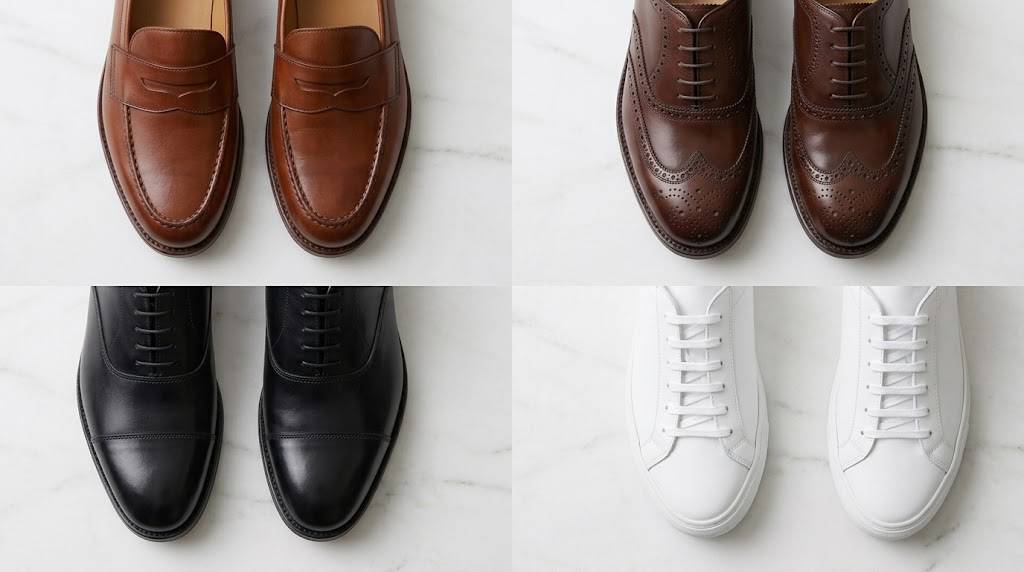
Footwear can instantly elevate or downgrade your overall appearance. Investing in high-quality business casual shoes for men ensures your outfit reads as intentional and refined.
| Shoe Style | Formality Level | Best Paired With |
|---|---|---|
| Leather Loafers (Penny or Bit) | Medium – High | Tailored chinos, dress trousers, or blazers |
| Derbies & Brogues | Medium – High | Wool slacks, structured chinos, button-down shirts |
| Suede Chelsea & Chukka Boots | Medium | Dark chinos, tailored denim, knitwear |
| Minimalist Leather Sneakers | Low – Medium | Tapered chinos, unlined blazers, crisp polos |
When choosing business casual shoes for men, keep leather clean, polished, and free of scuffs. Match your belt color to your footwear to maintain visual harmony throughout your look.
Are Jeans Business Casual For Men?
One of the most frequent styling questions is: are jeans business casual for men?
The short answer is: it depends on your office culture, but yes—if styled correctly.
While traditional corporate sectors like finance and law often prefer tailored trousers, modern tech, creative, and startup environments frequently welcome denim. If you are wondering how to make denim fit the dress code, follow these rules:
- Opt for Dark Washes: Stick strictly to deep indigo, dark navy, or solid black denim.
- Prioritize a Tailored Fit: Choose a slim or modern straight cut that sits cleanly over your footwear without pooling.
- Avoid Distressing: Rips, frayed hems, contrast stitching, and heavy fading instantly push denim into weekend-only territory.
- Dress Them Up: Always pair denim with formal anchors, such as a tailored blazer, a structured Oxford shirt, and leather dress shoes, to maintain professional balance.
When evaluating whether jeans are business casual for men in your specific workplace, observe what senior leadership wears on typical non-presentation days.
Adapting Your Look: Modern Business Casual
The concept of modern business casual has evolved far beyond the boxy khakis and oversized polos of past decades. Today’s approach emphasizes fit, high-performance fabrics, and unstructured tailoring.
Key elements of modern business casual include:
- Unstructured Blazers: Sport coats designed without heavy shoulder padding or stiff canvas linings, offering a natural silhouette that feels as comfortable as a cardigan.
- Performance Stretch Fabrics: Trousers and button-downs crafted with subtle elastane or technical blends that resist wrinkles during long commutes.
- Tailored Knitwear: Replacing rigid collared shirts with fine merino wool turtlenecks or open-collar knit polos under tailored jackets.
Mastering modern business casual means ensuring every item fits your body cleanly through the chest, shoulders, and waist.
Seasonal Styling: Business Casual For Men Summer Essentials
Dressing professionally requires adapting to shifting weather patterns. Mastering business casual for men summer and winter transitions ensures you stay comfortable, sharp, and climate-appropriate all year long.

Schedule Free Consultation Now
1. Summer Essentials: Beating the Heat
When temperatures rise, your priority shifts toward lightweight, breathable textiles without sacrificing structure:
- Linen-Cotton Blends: Pure linen creases easily, but cotton-linen or wool-linen blends offer breathable comfort while maintaining a crisp appearance.
- Tropical Wool: Lightweight, open-weave wool trousers naturally wick moisture and resist wrinkles better than heavy cotton.
- Warm-Weather Styling: Pair light grey or stone chinos with a navy short-sleeve polo or unbuttoned linen-blend shirt, finished with suede loafers and invisible no-show socks.
2. Winter Essentials: Layering & Cold-Weather Textures
When the temperature drops, winter business casual relies on rich textures, thermal comfort, and sophisticated layering:
- Heavyweight Fabrics: Swap poplin for heavy cotton twill, moleskin, and flannel trousers that trap warmth while keeping a clean drape.
- Knitwear Layering: Layer fine-gauge cashmere or merino wool crewnecks and turtlenecks underneath unstructured blazers.
- Weather-Ready Footwear & Outerwear: Swap loafers for leather Chelsea or Chukka boots, and top your look off with a tailored wool overcoat or trench coat.
Style Spotlight: Business Casual Black Men
For business casual black men, leveraging rich color contrast, tailored silhouettes, and complementary skin-tone palettes creates an effortlessly sophisticated appearance.
- Color & Tone Selection: Warm earth tones like camel, cognac, olive green, cream, burgundy, and deep navy contrast exceptionally well against darker skin tones.
- Textural Contrast: Layering dynamic textures, such as a suede jacket over a cream knit polo or a tweed sport coat over a crisp white shirt, adds depth and dimension to your outfit.
- Grooming & Details: Sharp line-ups, well-maintained facial hair, and carefully chosen accessories (like a minimal watch or a leather belt matching high-grade footwear) complete a polished business casual black men’s ensemble.
Incorporating Business Casual Suits Into Your Wardrobe
Can a suit be casual? Absolutely. The modern trend of business casual suits focuses on wearing tailored sets in a relaxed, approachable way. A comprehensive academic review on workplace dress codes highlights that strategic flexibility in professional attire improves employee morale and adaptability while maintaining organizational authority.
Instead of wearing a traditional conservative suit with a tie and dress shoes, elevate your business casual dress for men using business casual suits styled like this:
- Ditch the Tie: Wear a high-quality two-piece suit with an open-collar shirt or a fitted crewneck sweater.
- Pair with Loafers or Sneakers: Swap formal Oxfords for clean leather dress sneakers or suede penny loafers.
- Mix and Match Separates: Take the jacket from your navy suit and pair it with charcoal chinos, or wear your suit trousers with an unstructured knit blazer.
Elevating Your Fit: Custom Suits and Local Tailoring
No matter how high-end a garment is, poor fit will ruin its effect. Off-the-rack clothing is manufactured for average proportions, which often leads to excess fabric around the waist or pulling across the shoulders.
Finding Custom Suits Near Me & Local Tailors
Searching for custom suits near me or business casual suits near me connects you with local tailors who can measure your exact frame. Adjusting off-the-rack sleeve lengths, tapering trouser legs, and bringing in jacket waists can instantly turn an ordinary outfit into a bespoke-level ensemble.
The Distinction of Bespoke Suits
When standard sizing fails to deliver the right silhouette, investing in bespoke suits provides the ultimate sartorial solution. Unlike made-to-measure options that adjust existing templates, bespoke suits are constructed completely from scratch based on a unique paper pattern drawn specifically for your body.
Investing in bespoke or custom tailoring ensures your business casual suits drape naturally, maximize daily comfort, and project effortless confidence every time you step into the room.
Schedule Free Consultation Now
Frequently Asked Questions
What is the difference between business casual and smart casual for men?
Business casual leans more professional, requiring structured pieces like tailored chinos, collared dress shirts, Oxford button-downs, blazers, and dress shoes (loafers or derbies). Smart casual is more relaxed, allowing neat t-shirts, dark-wash jeans, field jackets, and clean leather sneakers.
Can you wear sneakers in a business casual environment?
Yes, but only if they are minimalist leather or suede dress sneakers in neutral tones (white, brown, black, or navy). Avoid athletic running shoes, high-tops, visible logos, or heavily worn sneakers.
Are polo shirts appropriate for business casual?
Yes. High-quality, solid-colored polo shirts in breathable fabrics like cotton piqué or fine merino wool are ideal for warm weather or hybrid offices. Ensure the collar holds its shape and the body fits cleanly without being overly tight or baggy.
How should business casual trousers fit?
Trousers should feature a modern slim or tailored straight fit. They should sit comfortably at your waist without needing to be pulled up, taper cleanly through the leg, and hit the top of your shoes with a slight or zero break.
Do I need to wear a belt with business casual outfits?
If your trousers have belt loops, wearing a matching leather or suede belt (matching the color tone of your footwear) anchors the outfit and creates a finished, professional look.