

Investing in a custom-crafted garment represents an appreciation for true sartorial artistry. Unlike mass-produced apparel built for fast-fashion cycles, a well-constructed bespoke piece utilizes natural horsehair canvases, hand-stitched interlinings, and premium woolens designed to mold dynamically to your body over time.
However, because these garments rely on organic fibers and delicate internal construction, executing bespoke suit maintenance properly is essential. Without a thoughtful suit care guide and disciplined routine, even the finest wardrobe investments will lose their signature drape and structural integrity.
1. The Golden Rule: Rest and Rotation
One of the most neglected elements of proper suit maintenance is simple physics: natural fibers like wool, cashmere, and silk need time to recover.
When you wear a suit, the fabric absorbs ambient moisture, body oils, and environmental odors. According to textile preservation studies from the International Wool Secretariat, fine merino wool fibers lose up to 30% of their structural elasticity when saturated with ambient humidity and perspiration. Wearing the same jacket and trousers back-to-back prevents moisture from evaporating, weakening stress points at the elbows, knees, and armpits.
- The 24–48 Hour Rule: Allow your garments to rest for at least one to two days between wears.
- Wardrobe Rotation: If you wear tailored clothing weekly, maintaining a rotation of multiple suits drastically extends their overall lifespan.
2. Daily Habits: Brushing and Airing Out
Master tailors universally agree that the secret to bespoke suit care isn’t harsh cleaning—it is proactive daily upkeep.
After every wear, hang your suit in a well-ventilated room for a few hours before placing it in the closet. Never store a garment immediately after wearing it while it still retains body warmth or moisture.
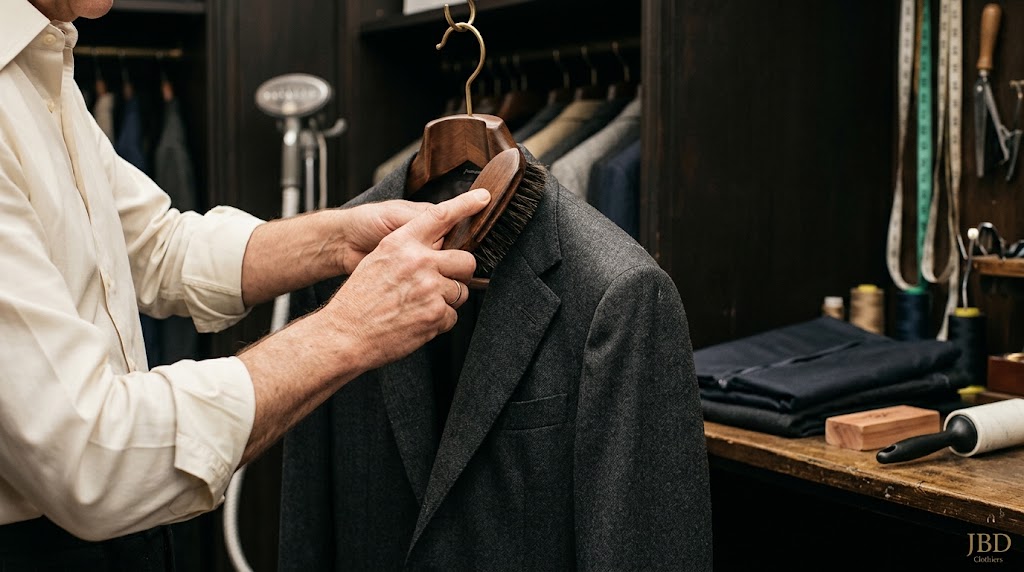
Gentle top-to-bottom brushing with a natural horsehair clothes brush removes microscopic dust, lint, and food particles before they settle deep into the weave, while redistributing the fabric’s natural oils to preserve its luster. Knowing what is a bespoke suit and how its floating canvas layer behaves makes it clear why gentle brushing protects internal tailoring without crushing the jacket’s natural silhouette.
- Air It Out: Hang your suit in a well-ventilated room or near an open window for a few hours before placing it back in the closet. Never store a garment immediately after wearing it while it still retains body warmth or moisture.
- Use a Natural Bristle Brush: Gently brush the fabric top-to-bottom using a horsehair clothes brush. This removes microscopic dust, lint, and food particles before they settle deep into the weave, while redistributing the fabric’s natural oils to preserve its luster.
For broader insights on curating and safeguarding bespoke garments, you can explore the expert curation principles outlined by JBD Clothiers.
3. Structural Storage: Hangers and Environment
Improper storage is the silent killer of custom tailoring. Standard wire or thin plastic hangers pinch the shoulders, destroying the carefully constructed roll and padding of a bespoke jacket.

- Invest in Contoured Wooden Hangers: Use wide, thick wooden hangers that mimic the natural slope of your shoulders, complete with a textured trouser bar to prevent slippage.
- Breathable Garment Bags: When storing suits long-term or between seasons, always use breathable cotton or canvas garment bags. Avoid sealed plastic dry-cleaning bags, which trap humidity, promote mold growth, and attract destructive fabric pests.
- Natural Pest Deterrents: Protect woolens from moths by utilizing cedar blocks or lavender sachets rather than toxic chemical mothballs.
4. Managing the Suit Cleaning Schedule
When establishing a suit cleaning schedule, less is almost always more.
In reality, aggressive industrial solvents like perchloroethylene (perc) and high heat strip fine wools of their natural lanolin. Industry analysis from the Drycleaning & Laundry Institute indicates that frequent dry cleaning degrades natural wool fibers and weakens internal floating canvas interlinings, shortening a bespoke garment’s lifespan by up to 50%.
- The Frequency Cap: Limit professional dry cleaning to no more than one to two times per year, unless the garment has sustained a major spill or visible grime.
- Spot Cleaning First: For minor stains or localized marks, dab gently with cold water or mild dish soap rather than submerging or dry-cleaning the entire garment.
- Selecting the Right Cleaner: Always use a trusted specialist who understands bespoke garment construction, hand-pressed lapels, and floating canvas layers rather than budget “drop-off” storefronts that outsource processing.
5. Wrinkle Management: Steam vs. Iron
Creases happen, but aggressive ironing can scorch fine fibers, flatten lapel rolls, and leave unsightly shiny patches on wool.
To master how to maintain bespoke suit finishes at home, rely on steam rather than direct heat:
- Hold the Steamer Away: Keep a garment steamer or steam iron 2 to 3 inches away from the fabric surface, letting the ambient steam relax the weave and drop wrinkles naturally.
- Preserve the Roll: Never press suit lapels completely flat. A bespoke jacket’s character relies on a soft, three-dimensional “roll” along the lapel line.
- Use a Pressing Cloth: If ironing trouser creases becomes necessary, always place a damp cotton pressing cloth between the iron and the suit fabric to protect the weave.
The Final Cut: Preserving Your Investment
True luxury clothing is designed to age gracefully, becoming more comfortable and personal the longer you own it. By committing to simple, consistent habits—brushing after wear, resting between outings, storing on proper wooden architecture, and minimizing chemical dry cleaning—your bespoke wardrobe will maintain its commanding silhouette for decades.
Schedule Free Consultation Now
Frequently Asked Questions
How often should I dry clean my bespoke suit?
You should dry clean your bespoke suit only once or twice a year, or when there is a visible stain or persistent odor that airing out cannot fix. Over-cleaning strips natural oils from fine wool and degrades internal canvas layers.
Can I use a standard iron on my custom suit?
Direct ironing can scorch fabric and leave shiny, permanent pressure marks on fine woolens. Instead, use a garment steamer held a few inches away to release wrinkles safely, or use a damp pressing cloth if ironing trousers is unavoidable.
Why is rotating my suits important for longevity?
Natural fibers like wool absorb body moisture and oils throughout the day. Giving your suit 24 to 48 hours of rest allows the fibers to breathe, dry out, and naturally bounce back to their original shape, preventing premature wear at high-stress joints.
What is the best way to store a bespoke suit long-term?
Store your suits on wide, contoured wooden hangers inside breathable cotton garment bags. Keep them in a cool, dry, well-ventilated wardrobe paired with natural cedar blocks or lavender to deter moths.