

Summer creates a real dilemma for professionals: dress for the heat and risk looking underdressed, or dress for the office and spend the day uncomfortable. The good news is that this is a solved problem — it just requires knowing which fabrics and construction choices actually matter when the temperature climbs.
Why Fabric Matters More Than You Think
Linen fibers absorb moisture at nearly 20% of their dry weight — compared to roughly 8% for cotton — making it dramatically more effective at managing heat and humidity against the skin. — MarketReportsWorld, Linen Clothing Market Report, 2025 [source]
Demand for lightweight linen fabrics in summer apparel lines has grown by 33% as more professionals look for breathable alternatives to standard wool suiting. — MarketReportsWorld, Linen Market Report, 2026 [source]
The difference between a suit that suffocates you by 11am and one that holds up through a full day often has nothing to do with how it looks on a hanger — it’s entirely about what’s happening at the fiber level.
The Best Summer Suiting Fabrics
Not all “summer fabric” claims are equal. A few options consistently outperform standard suiting wool in heat:
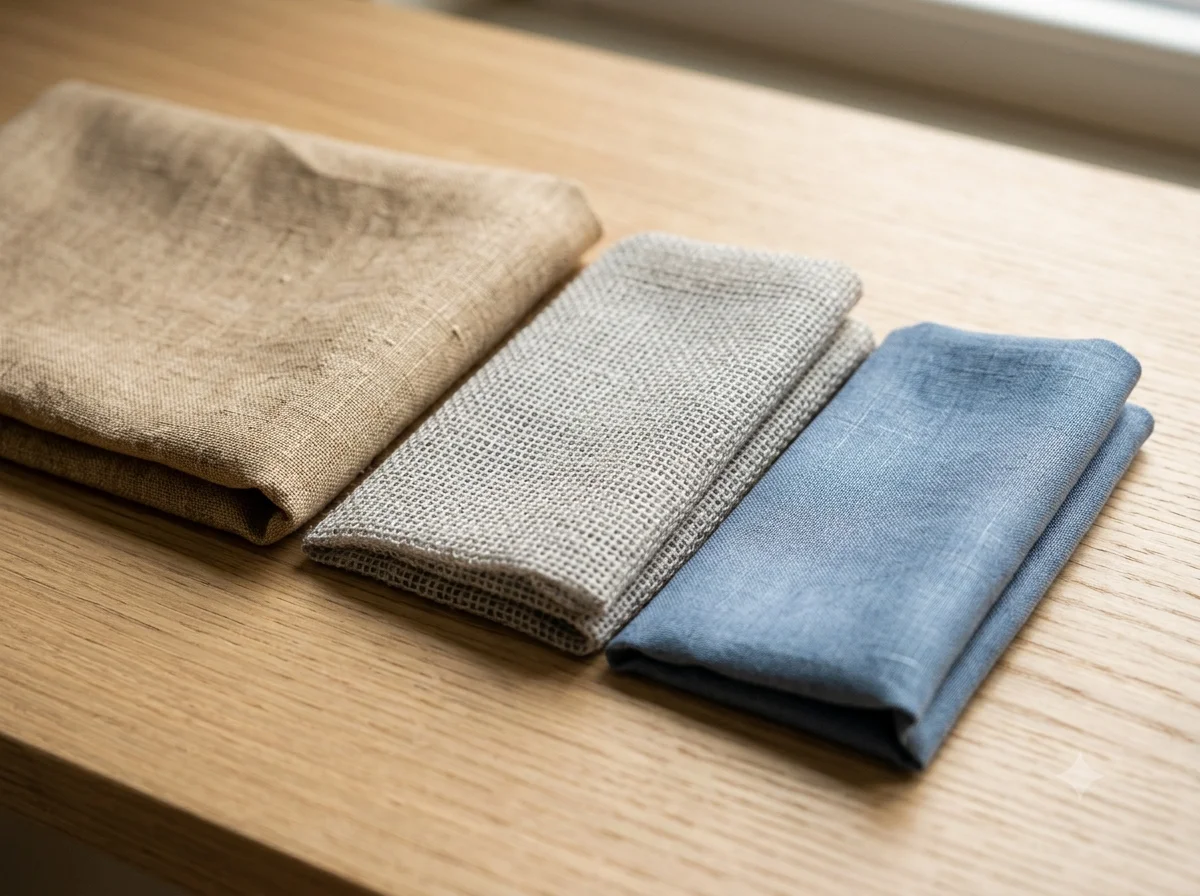
- Linen — maximum breathability and moisture management, with a relaxed texture that signals warm-weather appropriateness
- Fresco wool — an open, airy weave that retains a more formal, structured look while staying remarkably breathable
- Linen-wool-silk blends — combine linen’s cooling properties with wool’s structure and silk’s drape, reducing wrinkling
- Tropical-weight wool (Super 110s-130s, open weave) — for those who want to stay in a familiar wool feel without the weight
Men’s linen-based clothing sales have grown 15% as comfort, breathability, and sustainability become bigger purchasing factors — with North America accounting for roughly 35% of the global linen clothing market. — Global Growth Insights, Linen Clothing Market Report, 2025 [source]
Construction Details That Beat the Heat
Fabric is half the equation — how the garment is built matters just as much:
- Half-canvas or unlined jackets — reduce layers without sacrificing shape
- Pleated or self-lined trousers — improve airflow and reduce clinging
- Open weaves and breathable linings — let air move rather than trapping heat against the body
Color Choices for Summer
Lighter doesn’t mean less professional — it means seasonally appropriate. Tan, light gray, soft blue, and stone tones all read as polished while reflecting rather than absorbing heat. Saving navy and charcoal for cooler months (or evening events) and shifting toward these lighter tones for daytime summer wear is less a style statement and more practical thermodynamics.
Building a Summer-Ready Custom Wardrobe
The advantage of going custom for summer pieces is that fabric, color, and construction decisions happen together — a custom suit in fresco wool with a half-canvas build and unlined trousers is a fundamentally different garment than an off-the-rack “summer suit” that’s simply a lighter color in the same heavy construction as every other suit on the rack.
The Mistake to Avoid
The most common summer dressing mistake isn’t choosing the wrong fabric — it’s assuming that comfort and polish are a trade-off. They’re not, once fit, fabric, and construction are all working together. A well-built summer suit should feel like wearing significantly less than it appears to.
Beat the heat without losing the edge. Build your summer wardrobe with JBD Clothiers.