

The foundation of any polished formal look begins with your shoes. Whether you’re attending a black-tie event, an important business meeting, or a formal celebration, your choice of footwear communicates attention to detail and respect for the occasion. At JBD Clothiers, we’ve worked with thousands of men who understand that men’s formal shoes are far more than just foot covering they’re a crucial component of a sophisticated wardrobe.
This comprehensive guide will walk you through the essential men’s dress shoes styles, help you understand shoe construction, and teach you how to coordinate belts with precision. Our master tailors have guided countless clients through this process, and we’re sharing their expertise with you. When you’re ready to coordinate your shoes with custom-tailored suits, we’re here to ensure everything works in perfect harmony.
Understanding Formal Shoe Construction
Before diving into specific shoe styles, it’s helpful to understand how dress shoes are built. Modern men’s formal shoes consist of four primary structural elements. The toe is the front section that determines the shoe’s silhouette. The vamp is the middle section between the laces and toe, covering the ball of the foot. The facing is where the laces sit (or in slip-on shoes, where your foot enters), and variations here significantly impact the shoe’s formality level.
The quarter is the back section surrounding your heel and ankle. These four components work together to create the shoe’s overall character. Small variations in how these parts are constructed and proportioned create entirely different shoe styles, each appropriate for different occasions and outfit combinations. Understanding this shoe construction fundamentals helps you make confident choices about which formal shoes work best for your needs.
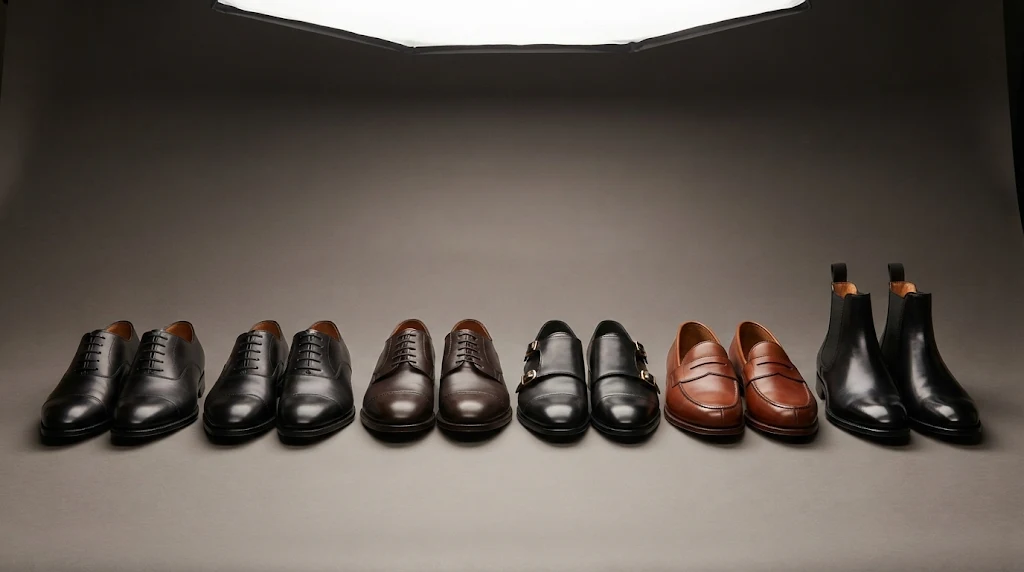
Six Essential Formal Shoe Styles
Each of the following styles serves a distinct purpose in formal menswear, with varying levels of formality, comfort, and versatility that suit different occasions and personal preferences.
The Oxford: Formal Perfection
The Oxford represents the gold standard of men’s formal shoes. As Britannica defines it, an Oxford is a low shoe usually made of leather and fastened with laces. This style is characterized by closed lacing, where the facing sits beneath the vamp. This construction creates a sleek, unified appearance that works for virtually any formal occasion. Black oxfords are considered the most formal option, while brown oxfords offer versatility for business and semi-formal settings.
Oxfords are your anchor formal shoe—the foundation of any professional menswear collection. They work beautifully for boardroom meetings, black-tie events, business formal settings, and sophisticated casual occasions. When you’re building your foundational men’s dress shoes collection, start here. If you’re preparing for a formal wedding or gala, black oxfords are essential.
Oxfords come in several variations. Plain toe oxfords offer maximum formality with no additional detailing. Cap toe oxfords feature a horizontal line across the toe and add subtle visual interest. Wingtip oxfords extend decorative stitching down the sides and around the toe, creating a more distinctive appearance suitable for business formal and semi-formal occasions.
The Derby: Versatile Elegance
Similar to the Oxford but slightly more casual, the derby became a popular sporting and hunting boot in the 1850s, as Wikipedia notes, and it remains a cornerstone of men’s dress shoes. The key difference is in the construction: the eyestays (the facings that hold the lace eyelets) sit on top of the vamp rather than beneath it, creating an open lacing structure. This seemingly small difference actually affects both the visual appearance and the fit of the shoe.
Derbies offer excellent versatility and comfort. Because the lacing opens more fully, they accommodate slightly wider feet and require less break-in time than oxfords. They work beautifully in business formal settings, pair well with suits for semi-formal events, and even transition into smart casual outfits with the right pairing. Men’s formal shoes in the Derby style are your second purchase after oxfords—they bridge the gap between traditional formality and comfortable wearability.
Like oxfords, Derbies come in multiple variations: plain toe (clean formality), cap toe (subtle detailing), and wingtip (more visual interest).
The Monk Strap: Distinguished Alternative
The Monk Strap shoe represents a more modern interpretation of formal menswear. This style features no laces and uses one or two buckled straps across the vamp instead. The strap system closes around the top of the foot, creating a distinctive look that sits stylistically between a Derby and an Oxford in terms of formality.
Monk Strap shoes work exceptionally well in business formal settings where you want your footwear to communicate sophistication with a touch of individuality. They’re particularly effective with custom business suits in solid colors, as the strap detail draws the eye. Single strap versions maintain a sleek appearance, while double strap versions offer additional visual interest. The buckle hardware should match your other accessories, this attention to detail is what separates polished dressing from merely wearing clothes.
The Loafer: Classic Sophistication
The Loafer is a moccasin-inspired slip-on shoe that blurs the line between formal and casual. Originally designed as a slipper for King George VI, loafers have evolved into a sophisticated menswear staple. These shoes feature no laces and rely on their design structure to stay on your foot. A raised seam runs down the center of the toe, creating visual interest and helping with fit.
Loafers work beautifully with custom suits in business formal and semi-formal settings, particularly in warmer months or less structured office environments. They pair exceptionally well with chinos and dressier casual outfits. Men’s dress shoes in the Loafer category offer comfort and approachability while maintaining professionalism. Penny loafers, tassel loafers, and bit loafers each offer subtle style variations.
The Dress Boot: Formal Statement
The Dress Boot represents men’s formal shoes taken a step further. Best understood as either an Oxford or Derby shoe with an extended shaft that covers more of the ankle, the Dress Boot makes a powerful visual statement. These formal shoes work exceptionally well for black-tie events, formal evening occasions, and situations where you want to make a distinctive impression.
Dress boots maintain formal shoe proportions with carefully designed heel height and shaft length that work with suit hems. When properly proportioned, dress boots with custom tuxedos create a dramatic silhouette that extends the line of your legs and adds visual weight to your lower half.
The Chelsea Boot: Modern Confidence
The Chelsea Boot represents a lace less ankle boot that originated as a practical riding boot and has evolved into sophisticated menswear. Characterized by a round toe, low heel, and elastic side panels that allow easy entry and exit, the Chelsea Boot occupies a space between formal and casual. When constructed in polished leather with a dressy heel, it works for semi-formal occasions and smart casual outfits.
Chelsea Boots in black or brown complement business casual and semi-formal settings beautifully. They work particularly well with chinos and dressier casual trousers. While not appropriate for black-tie or formal events, Chelsea Boots offer excellent versatility for men building a comprehensive footwear collection.
Foundational Formal Shoe Selection
As you build your collection of men’s formal shoes, start with these foundation pieces that will serve you across multiple occasions. Begin with a pair of black leather oxfords—this is your most formal option that works for virtually any black-tie or formal event. Next, add brown leather oxfords or derbies, which offer versatility for business formal settings and semi-formal occasions. These two pairs form the foundation of professional dressing.
Once you have these essentials, consider adding brown loafers for business casual and semi-formal flexibility, then black derbies or Chelsea boots for variety. This core collection of four to five pairs covers virtually every formal and professional situation you’ll encounter.
The key principle is quality over quantity. One pair of exceptional men’s dress shoes that fit perfectly and are made from premium leather will serve you better than several pairs of mediocre shoes. At JBD Clothiers, we believe in investing in footwear that will last for years and develop character with wear. When paired with perfectly tailored formal wear, your shoes become an investment in your professional image.
Advanced Shoe-to-Suit Coordination
Selecting the right men’s formal shoes goes beyond choosing a style you like—it involves understanding how your shoes relate to your suit’s proportions, color, and overall aesthetic. This is where the master tailor’s perspective becomes invaluable.
Heel Height and Suit Hem: The heel height of your shoes affects where your suit’s trouser hem sits. Higher heels can require slight trouser hem adjustments to maintain proper proportions. Our master tailors account for your typical shoe heel height when measuring for custom suits.
Toe Shape and Lapel Width: The width and shape of your shoe’s toe should complement your suit’s lapel width. Narrower lapels pair best with shoes featuring tapered toe shapes, while wider lapels work beautifully with rounder toe designs.
Color Matching to Suit: Black suits work exclusively with black shoes. Navy suits look exceptional with both black and dark brown shoes. Charcoal suits work beautifully with black or medium brown shoes. Medium brown suits pair best with matching brown shoes. Tan or light brown suits work best with matching brown or tan shoes.
Texture Coordination: Polished leather shoes pair best with polished suits. If your suit has subtle texture or patterns, your shoes can echo these qualities. A shiny patent leather oxford announces formality; matte leather shoes communicate understated confidence.
When you order custom tailoring from JBD Clothiers, we discuss your shoe collection and typical wear patterns. This information helps us create suits that look exceptional with your existing footwear.
Belt Selection and Matching Principles
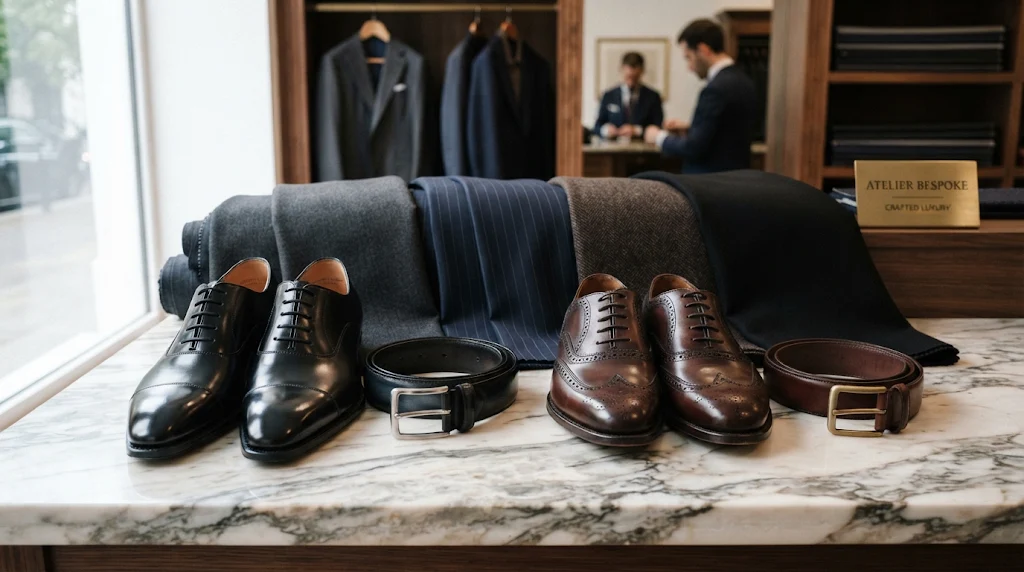
Your men’s leather belt is equally important as your shoes in completing a polished formal look. The fundamental principle is straightforward: your belt should match your shoes in color, tone, and approximate finish. Black shoes pair with black belts. Brown shoes pair with brown belts. This coordination creates visual continuity that communicates attention to detail.
Width Considerations: Select a belt width proportional to your build and your suit’s overall aesthetic. For most men, a belt width of one to one and a half inches works across all formal occasions. Your belt width should visually balance with your suit’s buttons and lapel width.
Material Selection: Genuine leather is the universal choice for formal wear. Leather develops character over time, maintains a polished appearance across different formality levels, and pairs beautifully with quality men’s formal shoes. Vegetable-tanned leather ages gracefully and develops a rich patina with wear. Build your foundation with a black leather belt and a brown leather belt in a shade that matches your most-worn brown shoe.
Metal Hardware Coordination: For advanced dressing, your belt buckle’s metal should coordinate with other accessories. If you wear a gold wedding band, silver cufflinks, and a steel watch, choose a silver-toned belt buckle. This level of coordination demonstrates sophisticated style awareness. When paired with custom dress shirts, these details create a complete, intentional look.
How to Match Shoes and Belts
The fundamental rule is simplicity: black shoes require black belts, and brown shoes require brown belts. This prevents visual tension that distracts from your overall appearance.
When wearing brown dress shoes, match the belt to the shoe’s shade as closely as possible. If you wear medium brown oxfords, choose a matching medium brown leather belt. If your shoes are lighter tan or taupe, your belt should echo this tone. Brown shades vary widely, so having multiple brown belts—ranging from dark brown to light tan—ensures you can coordinate perfectly with all your shoes.
With formal wear, precision matters more than with casual dress. Invest in belts that match your primary shoe colors exactly. When you wear men’s formal shoes with a belt that coordinates perfectly, the effect is intentional and polished. This is exactly what our custom suit services help you achieve.
Shoe Care and Maintenance
Quality men’s formal shoes represent a significant investment, and proper care extends their life and maintains their appearance. Begin with regular cleaning. After wearing your shoes, wipe them with a soft cloth to remove dust and dirt. For more thorough cleaning, use a soft brush designed for leather shoes and gently remove any debris.
Polishing maintains both appearance and leather health. Use quality shoe polish that matches your shoe color, applying it with a soft cloth in circular motions. Buff with another clean cloth to achieve a shine. Polishing every two weeks maintains a polished appearance and protects the leather from moisture and damage.
Shoe trees are invaluable. These wooden inserts maintain shoe shape, absorb moisture from inside the shoe, and prevent creasing. Place shoe trees in your shoes immediately after wearing them. Shoe trees extend the life of men’s dress shoes dramatically by maintaining their structure.
Storage matters as well. Keep your formal shoes in a cool, dry location away from direct sunlight. Store them with shoe trees in place and in a shoe box or dedicated shoe storage area. For long-term maintenance, consider professional restoration. After years of wear, a professional cobbler can resole your shoes, restitch the welt, and recondition the leather.
Get Expert Guidance on Formal Shoe and Belt Coordination
Selecting the perfect men’s formal shoes and coordinating them with belts, suits, and occasions is an art form that our master tailors at JBD Clothiers have perfected. Whether you’re building your first formal shoe collection or looking to expand your options, we’re here to guide you.
Our master tailors understand how shoes relate to suit proportions, how belt coordination communicates sophistication, and how the entire outfit works together. When you work with us on custom suit tailoring, we discuss your shoe collection and help ensure every element coordinates perfectly.
Frequently Asked Questions
Can I wear brown shoes with a black belt?
No. Black shoes require black belts, and brown shoes require brown belts. This combination creates visual tension. The exception is semi-formal occasions where the mismatch is more forgivable, but coordinated footwear is still the professional choice.
What shoe color goes with a navy suit?
Navy suits work beautifully with both black and dark brown shoes. Black oxfords offer maximum formality appropriate for black-tie events. Dark brown shoes provide warmth and work well for business formal and semi-formal occasions. When paired with custom tailored navy suits, either option creates an exceptional look.
Can I wear loafers to a formal event?
Loafers suit business formal and semi-formal settings but not black-tie or formal evening events. For those, choose oxfords, derbies, or polished dress boots.
How do I know if my shoes fit properly?
Your heel should stay put without slipping, the ball of your foot should feel comfortable, and there should be about a half-inch of room at the toe.
What heel height works with tailored suits?
Most men’s dress shoes have a one to one and a half-inch heel, which works with most suit proportions. When we tailor your suit, we account for your usual shoe heel height so the trouser length sits correctly.