

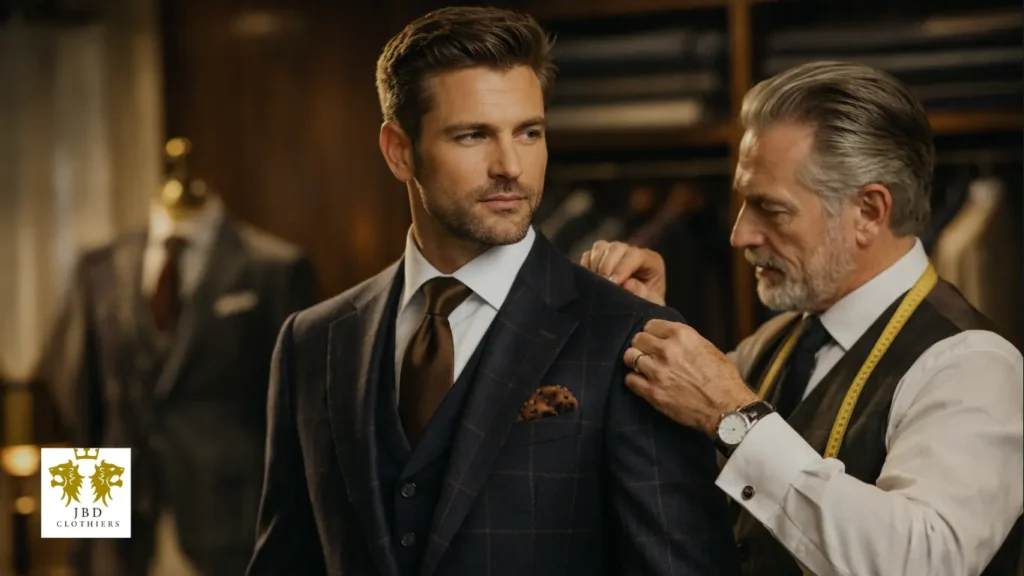
Walk into any modern business district today and you’ll notice something interesting: professionals are paying far more attention to how their clothing fits. The days of simply buying a suit off the rack are fading. People now want garments that reflect their personality, posture, and lifestyle, which is why discussions around Made-to-Measure vs Bespoke vs Fully Custom Suits are becoming increasingly common.
The tailoring industry reflects this shift. Research estimates the global tailored clothing market generated around $82 billion in 2022, driven largely by consumers seeking better fit and personalization. Surveys also suggest that about 68% of U.S. consumers prefer custom-tailored clothing over off-the-rack options because of improved comfort, individuality, and overall appearance.
Why does this matter so much? A well-fitted suit does more than just cover the body—it shapes presence. The right fit sharpens your silhouette, improves posture, and communicates confidence before you even say a word. That’s why understanding Made-to-Measure vs Bespoke vs Fully Custom Suits is essential when building a wardrobe that reflects professionalism and personal style.
Understanding the World of Custom Tailoring
The Evolution of Tailoring
Tailoring has existed for centuries, long before modern fashion houses dominated the industry. In fact, traditional tailoring originated in European workshops where garments were created specifically for individual clients. The word “bespoke” itself emerged from London’s Savile Row tailoring district, where cloth was literally “spoken for” by a client before the suit was made.
Over time, the fashion industry began producing ready-to-wear suits in factories. These garments were faster and cheaper to manufacture, which made them accessible to a much wider audience. But there was always a compromise: off-the-rack clothing was designed to fit an average body shape, not your body shape.
That’s where modern custom tailoring comes in. Today’s tailoring landscape offers several levels of personalization, ranging from made-to-measure adjustments to fully bespoke craftsmanship. Each approach uses different techniques, patterns, and levels of manual construction.
When discussing Made-to-Measure vs Bespoke vs Fully Custom Suits, it’s helpful to think of these categories as a spectrum. On one end you have faster, more standardized tailoring. On the other, you have highly personalized garments built entirely from scratch.
Custom vs Off-the-Rack Clothing
Tailoring has existed for centuries, long before modern fashion brands dominated the industry. Traditional tailoring began in European workshops where garments were crafted specifically for individual clients. The term “bespoke” originated from London’s Savile Row, where fabric was literally “spoken for” by a customer before the suit was made.
As fashion evolved, factories began producing ready-to-wear suits. These garments were faster and more affordable to manufacture, making them widely accessible. However, they were designed for average body measurements, not individual body shapes.
Modern tailoring bridges that gap. Today, options range from made-to-measure adjustments to fully bespoke craftsmanship, each offering different levels of personalization. When comparing Made-to-Measure vs Bespoke vs Fully Custom Suits, it helps to view them as a spectrum—from standardized tailoring to garments built entirely from scratch.
What Is Made-to-Measure Tailoring?
How the Made-to-Measure Process Works
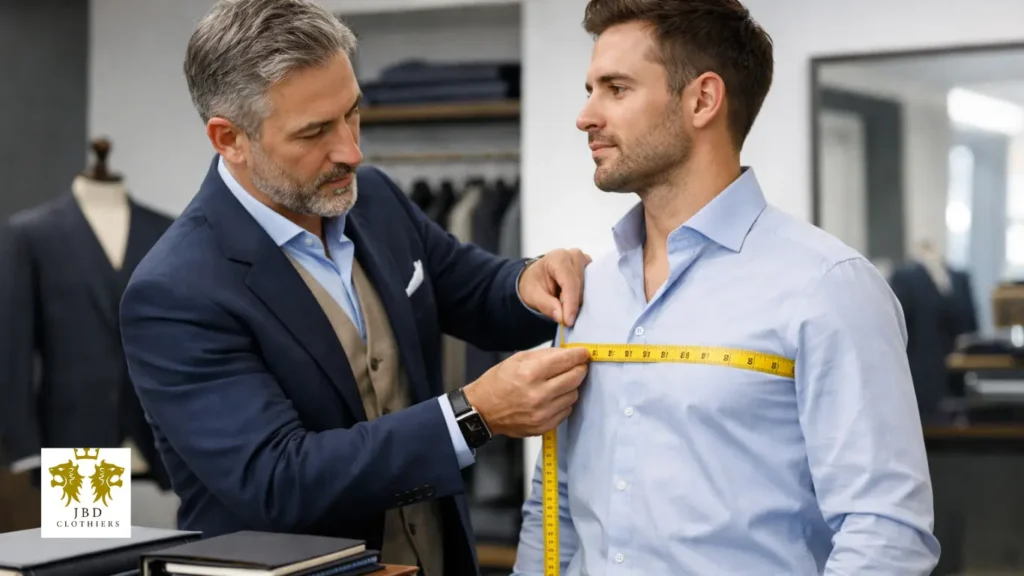
Made-to-measure tailoring represents the most accessible entry point into the world of custom clothing. In this process, a tailor begins with an existing suit pattern—often called a “block pattern”—and adjusts it according to the client’s measurements.
You still choose fabrics, lapel styles, pocket configurations, and other details, but the overall structure of the suit remains based on a pre-existing template. Think of it like customizing a blueprint rather than designing an entirely new building.
Typically, the process works like this:
- Measurements are taken.
- A base pattern closest to your size is selected.
- The pattern is digitally or manually adjusted.
- The garment is produced and fitted.
Made-to-measure suits usually take 4–6 weeks to complete depending on the tailor and fabric availability.
From a market perspective, made-to-measure suits dominate the custom clothing industry. Studies show they account for about 60% of the global custom suit market, largely because they provide a balance between affordability and personalization.
Advantages of Made-to-Measure Suits
The biggest advantage of made-to-measure tailoring is accessibility. You get a suit that fits noticeably better than ready-to-wear clothing without waiting months for production. For many professionals, that’s exactly what they need.
However, when evaluating Made-to-Measure vs Bespoke vs Fully Custom Suits, it’s important to understand that made-to-measure still operates within certain structural limits. The pattern already exists, so extreme adjustments may not always be possible.
What Is a Fully Custom Suit?
The Construction Process
Fully custom suits sit between made-to-measure and bespoke tailoring in terms of craftsmanship. Unlike made-to-measure garments, which start from a standard pattern, fully custom suits involve significant pattern refinement based on the client’s body shape.
In many cases, tailors analyze more than 30 body measurements along with posture, shoulder slope, and body balance. The pattern is then modified extensively to match these measurements. The result is a garment that fits far more naturally than one derived from a generic template.
This approach also allows greater flexibility in design. Clients can customize everything from lapel width to lining materials and button placement. The tailoring process often involves multiple fittings to refine the garment’s silhouette.
Why Professionals Choose Fully Custom Clothing
Many professionals gravitate toward fully custom suits because they provide the ideal balance between personalization and practicality. You get far more customization than made-to-measure garments without the extended timelines associated with traditional bespoke tailoring.
From a wardrobe perspective, fully custom suits offer exceptional versatility. Because the garment is designed specifically for your posture and proportions, it tends to maintain its structure and drape over time.
When discussing Made-to-Measure vs Bespoke vs Fully Custom Suits, this middle category often delivers the best overall value for professionals who want a refined appearance without waiting several months for production.
What Is Bespoke Tailoring?
The Bespoke Craftsmanship Tradition
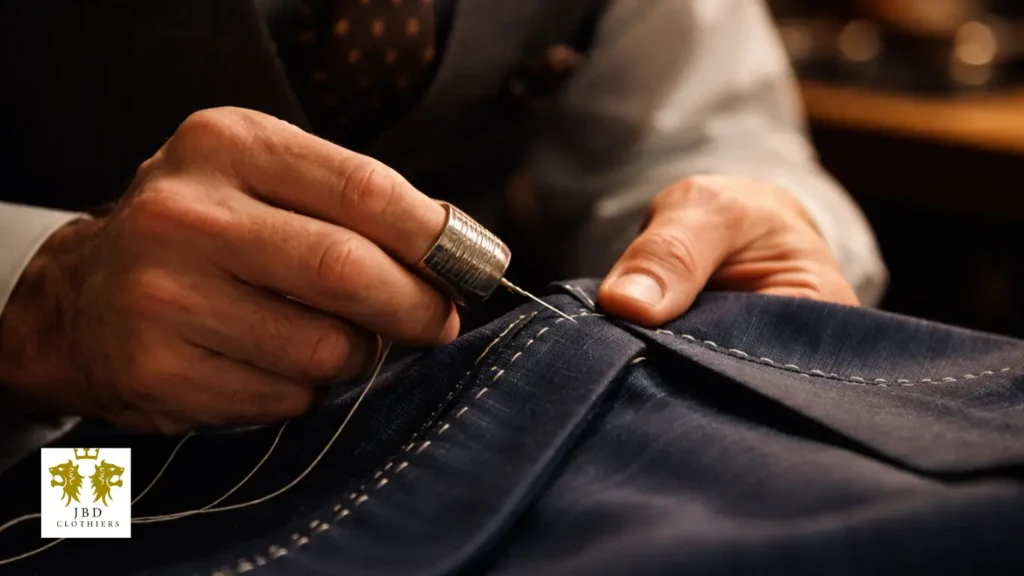
Bespoke tailoring is often considered the pinnacle of garment craftsmanship. Unlike made-to-measure or fully custom suits, bespoke garments begin with a completely blank slate. A tailor drafts the pattern entirely from scratch based on your measurements and body shape.
This process requires extraordinary skill and time. Multiple fittings are conducted throughout the construction process to refine balance, shoulder alignment, and sleeve pitch. The suit gradually evolves through several stages until the fit is perfect.
Bespoke tailoring allows virtually unlimited customization. Clients can choose from thousands of fabrics sourced from renowned mills and incorporate personalized details such as hand-stitched buttonholes, unique linings, and custom embroidery.
Why Bespoke Is Considered the Gold Standard
When comparing Made-to-Measure vs Bespoke vs Fully Custom Suits, bespoke tailoring stands out because every element of the garment is built specifically for the wearer.
Luxury bespoke suits can take 8–12 weeks or longer to complete depending on the complexity of the design and number of fittings required. This extended timeline reflects the meticulous craftsmanship involved.
Bespoke suits are also significantly more expensive, but for many clients the investment is worthwhile. A well-constructed bespoke garment can last decades if properly maintained.
Comparing Made-to-Measure, Fully Custom, and Bespoke
Key Differences in Fit and Construction
| Feature | Made-to-Measure | Fully Custom | Bespoke |
|---|---|---|---|
| Pattern | Existing template | Heavily modified pattern | Drafted from scratch |
| Customization | Moderate | High | Unlimited |
| Fittings | 1–2 | 2–3 | Multiple |
| Production Time | 4–6 weeks | 6–8 weeks | 8–12+ weeks |
| Price Range | Lower | Mid-range | Highest |
Understanding these distinctions helps clarify the debate around Made-to-Measure vs Bespoke vs Fully Custom Suits. Each option delivers a different balance between cost, time, and personalization.
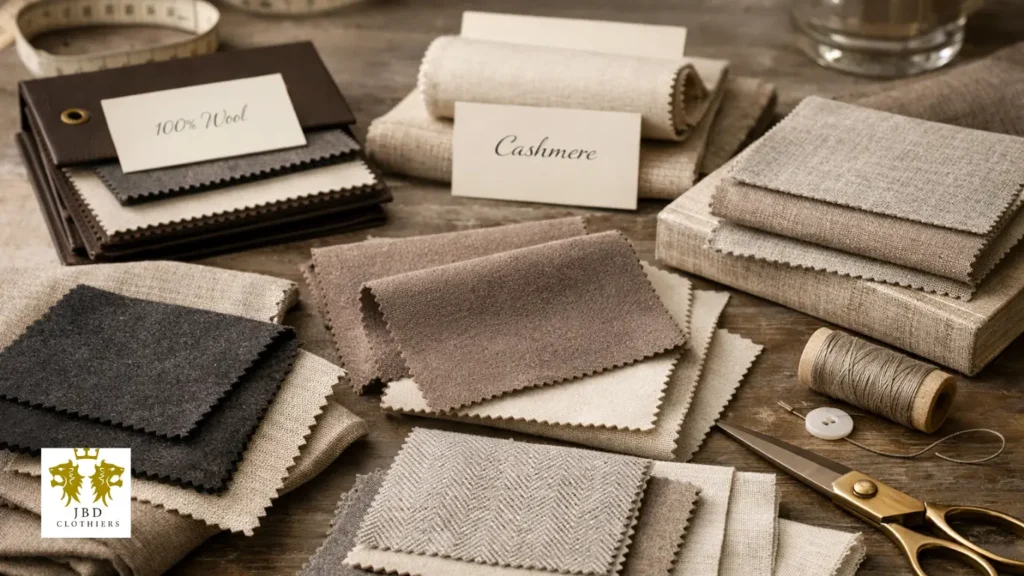
Explore JBD Clothiers luxury suit fabrics from Loro Piana, Zegna, Dormeuil, Drapers and more. Premium Italian and British mills for custom suits and shirts.
Timeline and Investment Comparison
Time and budget often play a major role when choosing between tailoring options. Made-to-measure suits are faster and more affordable, making them attractive to younger professionals entering the world of tailored clothing.
Fully custom suits provide greater design flexibility and improved fit while still maintaining a manageable production timeline. Bespoke tailoring, meanwhile, remains the ultimate expression of craftsmanship for clients who value tradition and meticulous detail.
Which Type of Suit Is Right for You?
Choosing Based on Lifestyle
Your lifestyle plays a major role when deciding between Made-to-Measure vs Bespoke vs Fully Custom Suits. If you attend frequent business meetings or professional events, investing in tailored clothing can dramatically improve your confidence and presentation.
For many professionals, made-to-measure garments offer a practical starting point. However, individuals with unique body proportions often benefit more from fully custom or bespoke tailoring.
Choosing Based on Budget and Expectations
Budget naturally influences the decision as well. Made-to-measure suits are generally the most affordable, while bespoke garments require a much larger investment.
That said, tailoring should always be viewed as a long-term wardrobe strategy. A well-constructed suit can last many years when properly maintained, making it far more cost-effective than replacing cheaper garments repeatedly.
The Future of Custom Tailoring
Technology is rapidly transforming the tailoring industry. Digital body scanning, AI-based pattern adjustments, and virtual fittings are making personalized clothing more accessible than ever before.
At the same time, the desire for craftsmanship continues to grow. Consumers increasingly value durability and individuality over mass-produced fashion. This trend suggests that discussions around Made-to-Measure vs Bespoke vs Fully Custom Suits will remain relevant for years to come.
Conclusion
Choosing between Made-to-Measure vs Bespoke vs Fully Custom Suits ultimately depends on your priorities. Made-to-measure suits offer convenience and affordability. We provide fully custom suits in Baltimore, which deliver enhanced personalization and fit. Bespoke tailoring represents the highest level of craftsmanship and individuality.
Each approach serves a different purpose, but they all share one important goal: creating clothing that fits better, feels better, and reflects the unique personality of the person wearing it.
FAQs
1. What is the main difference between made-to-measure and bespoke suits?
Made-to-measure suits modify an existing pattern, while bespoke suits are built entirely from scratch using a unique pattern created specifically for the client.
2. Are bespoke suits worth the investment?
Yes, many people consider bespoke suits worthwhile because of their superior fit, craftsmanship, and longevity.
3. How long does it take to make a bespoke suit?
Most bespoke suits take between 8 and 12 weeks to complete due to multiple fittings and handcrafted construction.
4. Is made-to-measure better than off-the-rack suits?
In most cases, yes. Made-to-measure suits provide a significantly better fit and greater customization than ready-to-wear garments.
5. Which type of custom suit is best for professionals?
Fully custom suits often provide the best balance between personalization, craftsmanship, and practicality for modern professionals.