

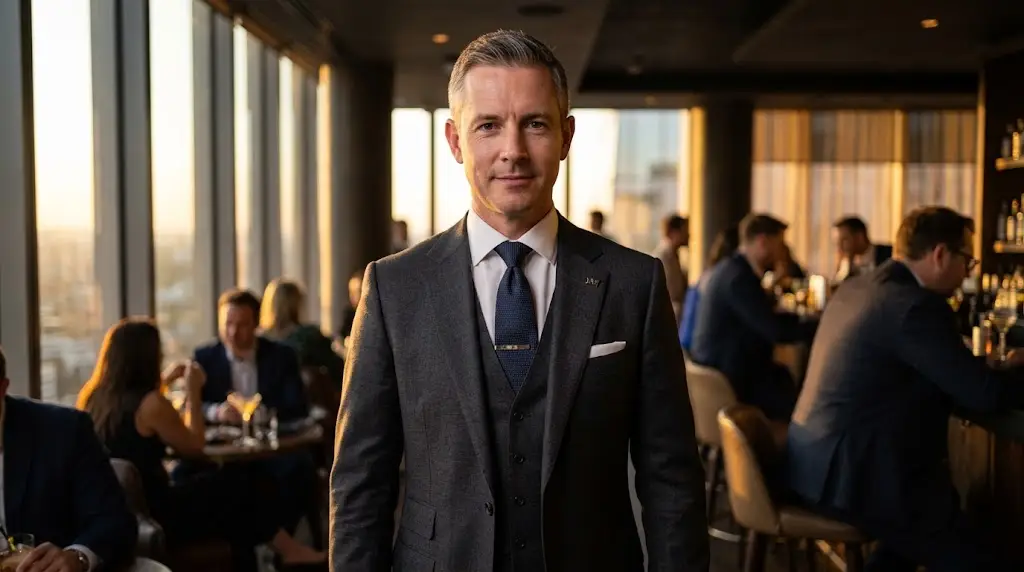
You’ve received an invitation marked “semi-formal attire.” You stare at your closet. Is it a tuxedo situation? Can you wear a regular suit? What about a tie—is it required?
If you’re confused about what semi-formal attire means, you’re not alone. Semi-formal is the most misunderstood dress code in menswear, sitting in an ambiguous middle ground between “business casual” and “black-tie formal.”
The Bottom Line: Semi-formal attire for men means looking polished and professional without the full formality of a tuxedo. It’s sophisticated enough for galas, weddings, and business events—but relaxed enough that you won’t look overdressed at cocktail parties or rehearsal dinners.
This guide breaks down exactly what semi-formal means, shows you how to build semi-formal outfits for any occasion, and explains how it differs from other dress codes. By the end, you’ll know exactly what to wear—and feel confident doing it.
What Is Semi-Formal Attire for Men?
To understand semi-formal attire, it helps to understand where it sits on the formalwear spectrum:
- Formal / Black Tie: Tuxedos with satin facings, formal dress shirts, and bow ties.
- Semi-Formal: Dark to mid-tone tailored suits, high-end dress shirts, silk or textured ties, and leather dress shoes.
- Business Casual: Unstructured blazers, tailored trousers or dark denim, open collars, and dress loafers.
Historically, semi-formal attire emerged as an alternative to rigid eveningwear. Today, a modern well-tailored suit forms the foundation of true semi-formal dressing. While a tuxedo is too formal and a sport coat with casual trousers is too relaxed, a structured two-piece suit in premium wool hits the exact level of sophistication required.
Anatomy of the Perfect Semi-Formal Outfit
Building an ideal semi-formal ensemble requires harmonizing five distinct elements. Each component should display immaculate fit and premium material quality.
1. The Base Suit
A matching two-piece suit is mandatory. For evening events, dark charcoal, midnight navy, or deep slate blue are classic, foolproof choices. For daytime semi-formal events, high-end mid-gray or medium blue worsted wools are appropriate.
Pro Tip on Construction: Internal construction dictates how a jacket drapes across your chest and shoulders. A full-canvas or half-canvas custom suit naturally molds to your body frame over time, preventing the boxy or stiff appearance common in fused off-the-rack garments.
2. The Dress Shirt
Stick to a structured, tailored dress shirt in pure long-staple cotton fiber standards, which ensure superior breathability, tensile strength, and a smooth hand-feel against the skin. A crisp white or soft ice blue spread-collar shirt provides a clean contrast against dark tailoring. Ensure your sleeve cuffs extend roughly 1/2 inch past your suit jacket sleeve.
3. Neckwear & Pocket Squares
While some modern creative events permit an open collar, traditional semi-formal standards call for a necktie. Opt for pure silk grenadine, woven jacquard, or refined matte silk ties in solid deep hues (burgundy, forest green, navy, or dark plum). Pair with a classic white linen or rolled-edge silk pocket square folded cleanly into your chest pocket.
4. Footwear and Leather Accessories
Your footwear choices reflect your attention to detail:
- Evening Events: Polished black leather Oxfords, wholecuts, or sleek double monk straps.
- Daytime Events: Dark espresso or oxblood leather Oxfords and dress loafers.
- Rule: Match your leather belt strictly to the tone and finish of your dress shoes.
Step-by-Step Semi-Formal Formulation
- Step 01: Tailored Suit — Charcoal or Navy worsted wool two-piece.
- Step 02: Dress Shirt — Crisp white cotton with spread collar.
- Step 03: Refined Accessories — Silk grenadine tie and white linen pocket square.
- Step 04: Fine Leatherwork — Polished black or dark burgundy Oxfords.
Semi-Formal Variations: Time, Venue & Season
Context dictates nuance. A semi-formal wedding held at a beachside resort demands subtle adjustments compared to an autumn evening gala in the city.

Daytime vs. Evening Semi-Formal
- Daytime (Before 6 PM): Lighter cloth weights, medium gray or soft navy suits, light blue dress shirts, and subtle geometric or textured ties.
- Evening (After 6 PM): Deep charcoal or dark midnight blue suits, pure white dress shirts, dark rich neckwear, and high-shine black dress shoes.
Seasonal Fabric Selection
To maintain physical comfort alongside aesthetic elegance, align your cloth selection with the season:
- Spring & Summer: High-twist worsted wools, wool-silk blends, or lightweight tropical wools. According to textile engineering studies on high-twist wool, open-weave structures significantly enhance crease resistance and natural elasticity while allowing maximum airflow.
- Fall & Winter: Mid-to-heavyweight wools (280g–340g), subtle flannel textures, or rich worsted blends that leverage natural moisture-wicking and insulation properties verified by The Woolmark Company technical fabric research to maintain stable body temperature.
The Semi-Formal Fit Checklist
No amount of luxury fabric can compensate for a poor fit. Before leaving for your event, ensure your suit passes the JBD Fit Test:
- Shoulder Alignment: The suit shoulder seam sits cleanly at the edge of your natural shoulder bone without overhang or divots.
- Jacket Collar Hug: The suit collar rests flush against your shirt collar around the nape of your neck without a visible gap (“collar gap”).
- Torso & Waist Buttoning: When buttoned, the top jacket button closes smoothly across your midsection without pulling an ‘X’ crease across the front.
- Sleeve Length Ratio: Jacket sleeves reveal exactly 1/4 to 1/2 inch of dress shirt cuff above your wrist.
- Trouser Hem & Break: Trousers drape with a clean slight break or no break, breaking lightly over the top of your leather dress shoes.
What to Avoid in Semi-Formal Attire
To maintain a sophisticated standard, avoid these frequent styling missteps:
- Wearing a Tuxedo: Tuxedos belong strictly to black-tie dress codes. Wearing a tuxedo to a semi-formal event looks overdressed.
- Ditching the Suit Jacket: A dress shirt and tie without a tailored jacket drops your look straight down to business casual.
- Casual Footwear: Sneakers, suede slip-ons, or casual boots undermine suit tailoring. Always wear structured leather dress shoes.
- Novelty Accessories: Loud, overly bright ties or whimsical pocket squares distract from the clean lines of a well-cut suit.
Elevate Your Semi-Formal Wardrobe with JBD Clothiers
When an event calls for semi-formal attire, off-the-rack garments often require extensive alterations and compromise on shoulder structure or waist suppression.
At JBD Clothiers, we specialize in crafting custom-fitted garments engineered specifically to your body proportions, lifestyle, and aesthetic preferences. From hand-selected European wools to precision canvas construction, our bespoke tailoring process guarantees an effortless, commanding presence at every event.
Book a Private Consultation with a JBD Stylist
Frequently Asked Questions
Can I wear a black suit for semi-formal events?
Yes. A fitted black suit is completely acceptable for evening semi-formal occasions. To avoid looking like a tuxedo or funeral attire, pair it with a crisp white dress shirt, a textured silk tie (such as grenadine or jacquard), and polished black leather dress shoes.
Is a tie strictly required for semi-formal attire?
A necktie is strongly recommended for traditional semi-formal occasions, especially evening weddings and corporate galas. However, for modern or summer daytime events, an open-collar tailored dress shirt paired with a dark suit and a crisp linen pocket square can be acceptable if specified by the host.
Can I wear a blazer and dress trousers instead of a full suit?
True semi-formal standards require a matching two-piece suit. While an ultra-high-end textured blazer paired with tailored dress slacks can work for smart casual settings, a full suit remains necessary to meet true semi-formal dress expectations.
What is the main difference between semi-formal and cocktail attire?
Semi-formal attire follows classic, conservative tailoring guidelines (dark charcoal or navy suits, white dress shirts, subtle silk ties). Cocktail attire leans slightly more expressive, allowing room for creative accessories, unique suit colors, textured fabrics, or statement pocket squares.