

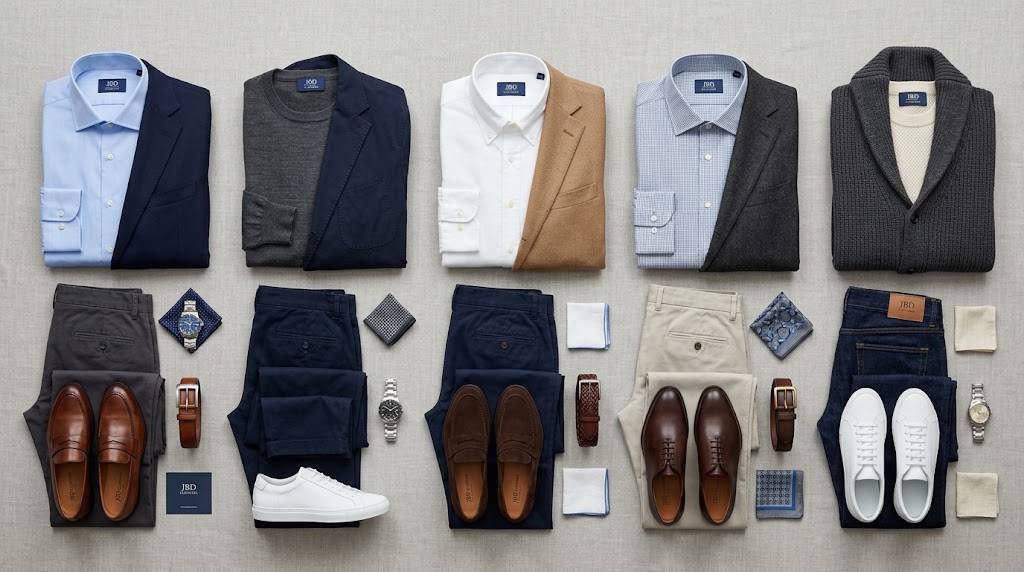
You’re invited to a casual dinner. Your boss says “smart casual.” And suddenly, you’re paralyzed. Is it blazer-required or jeans-acceptable? Professional or relaxed? Smart casual is the most confusing dress code in modern dressing—it exists in the gray area between professional and weekend wear, and getting it wrong can make you look either overdressed or sloppy.
After 20+ years tailoring custom garments for men across every occasion, I’ve seen thousands get smart casual wrong. The good news? It’s the most forgiving dress code when you understand the formula. This guide breaks down exactly what smart casual means, why it matters, and how to build outfits that work from business dinners to casual Fridays.
What Smart Casual Actually Means
Smart casual is intentional dressing without formality. It’s the opposite of “I grabbed whatever was clean.” Your outfit shows you’ve thought about it, but you haven’t dressed for a boardroom.
Think of the spectrum this way:
| Dress Code | Formality | What You’re Saying |
|---|---|---|
| Business Formal | Suit + Tie | “This moment matters.” |
| Business Casual | Dress pants + Blazer | “I work professionally.” |
| Smart Casual | Chinos + Sport Coat | “I’m put-together but relaxed.” |
| Casual | Jeans + T-Shirt | “Everyday comfort.” |
Smart casual sits between business casual and casual. The key difference? You add structure or intentional layering instead of defaulting to basics.
The Smart Casual Formula: What Actually Works
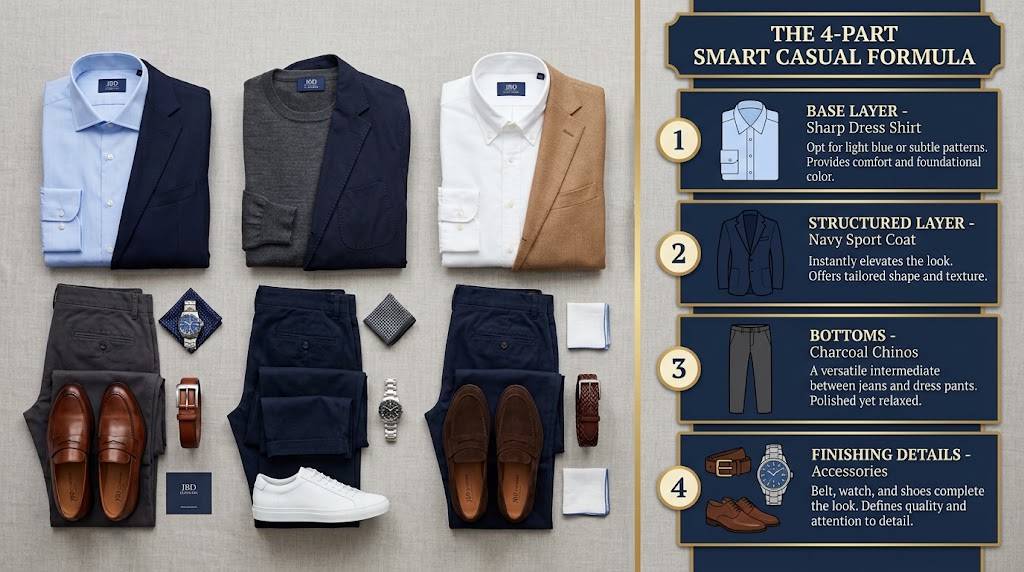
Every smart casual outfit follows the same building blocks. Master these, and you’ll never guess again.
1. Start with Your Base Layer
Dress Shirt (solid, checked, or oxford cloth) or High-Quality Knit
This is your foundation. It’s the first piece people see and sets the entire tone.
2. Add a Structured Layer
Sport Coat, Blazer, or Structured Cardigan
This is what separates smart casual from casual. A layer with intentional structure signals “I got dressed.”
- Sport Coat / Blazer: The most versatile option. Navy, charcoal, or camel sport coats work with almost everything.
- Structured Cardigan: For warmer weather or relaxed settings. It’s a sweater with intention.
- Unstructured Blazer: A lighter alternative for casual dining. Still looks intentional.
Pro Tip:
A custom blazer is engineered to your frame, eliminating costly alterations later.
3. Choose Your Bottoms
Chinos, Dress Pants, or Dark Premium Denim
Your bottom half anchors the outfit. Smart casual typically means:
- Chinos (Best Choice): Neutral colors (navy, charcoal, stone, olive). Chinos are casual enough to feel relaxed but structured enough to look intentional.
- Dress Pants: Gray, navy, charcoal, or black. These look more formal than chinos but work perfectly for smarter smart casual.
- Dark Denim: Only if the event leans very casual. Dark, premium denim with a clean fit reads better than light-wash styles.
Fit is everything. Baggy or overly tapered bottoms undermine even the best top. The fit should be straight through the thigh with a slight taper at the ankle.
4. Add Finishing Details
- Belt: Leather, quality material, color-coordinated with your shoes.
- Watch: A simple leather-strap watch or understated metal piece.
- Pocket Square: Optional but impactful. Shows intention and style.
- Shoes: Clean leather dress shoes, loafers, or quality minimalist sneakers. Condition matters.
5 Smart Casual Outfit Combinations (Real Examples)
Outfit #1: The Friday Night Dinner
Light blue dress shirt + Navy sport coat + Charcoal chinos + Loafers + Brown belt
This is the quintessential smart casual. The light blue shirt is friendly. The navy coat adds polish. Charcoal chinos keep it relaxed. Loafers say “I’m dressed but comfortable.” This works at nice restaurants, casual networking events, or when meeting friends you want to impress.
Outfit #2: The Structured Knit Option
Charcoal merino wool sweater + Navy unstructured blazer + Dark chinos + Clean white sneakers
For warmer weather or more relaxed venues. The sweater-under-blazer combo is modern smart casual. It’s less formal than a dress shirt but more intentional than a crew neck alone. White sneakers modernize the look.
Outfit #3: The Texture Play
White oxford cloth shirt + Camel sport coat + Navy chinos + Suede loafers
Camel is the modern neutral that elevates any outfit. Paired with white and navy, it creates depth. The oxford cloth adds texture to the white shirt. Suede loafers add softness.
Outfit #4: The Pattern Combination
Subtle blue check shirt + Charcoal blazer + Stone chinos + Leather dress shoes
The check in the shirt is visible but subtle. This works for client dinners, upscale casual events, or when you want to show style sophistication.
Outfit #5: The Minimal Smart Casual
Cream-colored knit + Structured charcoal cardigan + Dark jeans + White leather sneakers
This skews more casual but stays smart casual through the structured cardigan. Cream and charcoal is sophisticated. White leather sneakers are intentional. This works for casual team dinners or modern office settings.
Smart Casual by Occasion: When to Adjust
Smart casual isn’t one-size-fits-all. Context matters.
Client Dinner or Business Event
Lean toward dress pants instead of chinos. Use darker colors (navy, charcoal, black). Ensure your structured layer is a proper sport coat or blazer. Add a pocket square. Wear leather dress shoes.
Casual Dinner with Friends
Chinos are perfect here. Lighter colors work. A structured cardigan is acceptable instead of a coat. Quality dark jeans are fine. Clean sneakers are acceptable.
Upscale Restaurant
Dress pants, sport coat, leather shoes, watch. Skip sneakers entirely. A pocket square adds polish. This is the “dressier” side of smart casual.
Casual Tech/Creative Office
Dark jeans with a structured cardigan or unstructured blazer. Premium sneakers work. Lighter colors are fine. A watch shows intentionality.
Common Smart Casual Mistakes (And How to Fix Them)
✓ DO: Add Structure
A blazer or sport coat transforms any outfit from casual to smart casual instantly.
✗ DON’T: Go Too Casual
Coordinate your belt with your shoes. Choose complementary shirt-and-layer colors.
✓ DO: Match Colors Intentionally
Your bottom half anchors the outfit. Smart casual typically means:
✗ DON’T: Ignore Fit
An expensive suit that doesn’t fit reads worse than affordable, well-fitting baics. Fit is non-negotiable.
✓ DO: Keep Shoes Clean
Scuffed, dirty, or damaged shoes ruin even the best outfit. Condition your leather regularly.
✗ DON’T: Overaccessorize
Multiple chains, excessive rings, or loud watches distract from the outfit. Choose 1-2 quality pieces.
✓ DO: Tuck Your Shirt
Unless wearing a structured cardigan, tuck your dress shirt. It looks intentional and polished.
✗ DON’T: Wear Casual Socks
Your socks should match your trousers or be neutral dark. No logos or loud patter
The Measurement Difference: Why Fit Changes Everything
Smart casual works because it relies on intentionality. But intentional dressing falls apart with poor fit.
Off-the-rack blazers are cut for average proportions. Your shoulders might be broader, narrower, higher, or lower. Sleeves are often too long or too short. The torso might pull incorrectly.
When each piece is custom tailored to your measurements, the transformation is dramatic. Your shoulders sit perfectly. Your sleeves end at your wrist—exactly right. Your shirt doesn’t pull. Your chinos have the right rise and taper for your frame.
Smart casual is about intention. Custom-fitted pieces are the ultimate expression of that intention.
Smart Casual: The Sustainable Wardrobe
One of the best things about smart casual is that it’s built on repeatable basics. You don’t need 50 pieces. You need quality fundamentals that mix and match, following Textile Exchange principles for sustainable wardrobing:
- 2-3 structured layers (sport coat, blazer, cardigan)
- 4-5 quality tops (dress shirts, knits)
- 3-4 bottoms (chinos, dress pants, dark jeans)
- 2-3 pairs of shoes (leather dress shoes, loafers, quality sneakers)
- Accessories: belt, watch, optional pocket square
That’s potentially 15-20 unique outfits from 12-15 pieces. Compared to fast fashion cycles, this is sustainable. And when each piece fits perfectly—because it’s custom-tailored to your measurements—you actually wear everything. Nothing languishes in the closet because it doesn’t fit right.
Why Smart Casual Matters
Getting smart casual right signals something important: you respect the event, you respect yourself, and you’ve put thought into how you present yourself. It’s not about expensive brands. It’s about fit, intentionality, and understanding the code. According to the Society of Master Tailors, precision in garment construction is what separates intentional dressing from casual wear.
Smart casual is the uniform of modern professionalism. Master it, and you’re equipped for almost every social or professional scenario.
Get Perfectly Fitted Smart Casual Pieces
Off-the-rack smart casual works when fit is perfect. At JBD Clothiers, every custom piece is tailored to your exact measurements—shoulders, sleeves, torso, inseam. No guessing. No alterations. Just perfectly fitted pieces.
Whether you need a sport coat, dress shirts, or custom pants, we build each piece to your frame.
Frequently Asked Questions
Can I wear jeans for smart casual?
Yes, but only premium dark denim with a clean fit. Light wash or faded jeans read as casual. Dark denim works best in casual social settings rather than business dinners.
Do I need different outfits for different smart casual events?
Not necessarily. A well-chosen neutral sport coat (navy, charcoal, or camel) works across almost all smart casual occasions. Pair it with your well-fitting basics and you have dozens of combinations.
What’s the difference between smart casual and business casual?
Business casual is more formal: dress pants, dress shirt, sometimes a blazer, always leather shoes. Smart casual is more flexible: chinos or dress pants, structured shirt or knit, optional blazer, can include quality sneakers.
Can I wear a full suit for smart casual?
Technically yes, but you’re overdressed. Smart casual specifically avoids the full suit look. Mix separates instead (mismatched blazer and chinos).
How do I know if my fit is actually good?
Good fit means: shoulders sit where yours naturally do, sleeves end at your wrist with a slight bend, the shirt doesn’t pull across your chest, chinos have a straight line from hip to knee with a slight taper. If you’re adjusting or tugging, the fit is off.
Should I get clothes tailored if I buy off-the-rack?
Often yes, but there’s a limit. Tailoring can adjust hemming and taper. It cannot change shoulder width or overall architecture. If a blazer’s shoulders don’t fit, tailoring won’t fix it. Custom pieces solve this at the source.
How do I know if my fit is actually good?
Good fit means: shoulders sit where yours naturally do, sleeves end at your wrist with a slight bend, the shirt doesn’t pull across your chest, chinos have a straight line from hip to knee with a slight taper. If you’re adjusting or tugging, the fit is off.
What colors work best for smart casual?
Neutrals are safest: navy, charcoal, white, cream, camel, olive, and stone. These pair endlessly. Once you master neutrals, add subtle patterns (checks, stripes).