
When someone passes away, the focus belongs on honoring their memory and supporting the grieving family. What you wear should fade into the background—not distract. This guide helps you dress appropriately when you’re grieving, busy, or short on time. Whether you own a suit, want to customize a suit, or need guidance on last-minute options, we’ve covered what matters.
Why What You Wear Matters at a Funeral
Funeral attire isn’t about fashion. It’s about respect. When you show up dressed thoughtfully, you signal to the family that you honor their loss. You’re saying: “This person mattered. This moment matters.”
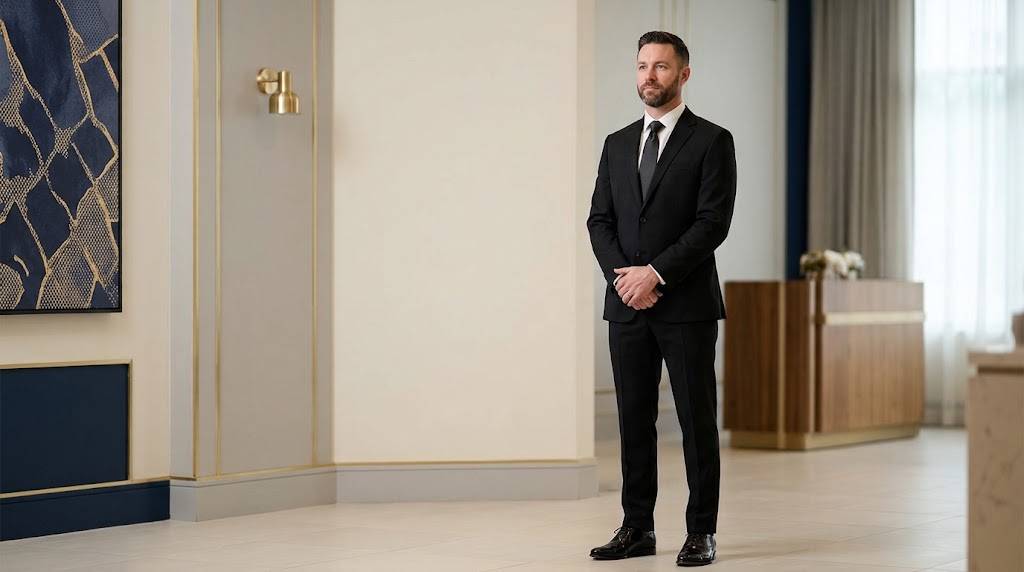
The default choice—black or dark suit—exists for a reason. Dark colors communicate solemnity. A well-fitting suit communicates intention. Together, they show respect without drawing attention to yourself.
A practical rule: It’s better to be slightly overdressed than underdressed at a funeral.
Four Factors to Consider First
Before choosing your outfit, consider these contextual factors:
1. Location & Season
Winter funerals in northern climates call for darker, heavier fabrics. Summer services in warm regions might accommodate lighter shades like gray or tan. Always dress for the weather while maintaining a respectful appearance.
2. Religious or Cultural Customs
Different faith traditions have specific dress code expectations. According to the Interfaith Center, Christian, Jewish, Muslim, and other religious services may vary significantly. Check the obituary or funeral home details, or call the family directly. Respecting their customs is more important than following general rules.
3. The Deceased’s Wishes
Some obituaries specify dress codes. You might read “casual attire requested” or “festive colors welcome.” Follow these wishes—they reflect the family’s values and the person being honored.
4. The Type of Service
A formal funeral service calls for more structured attire. A casual memorial gathering or celebration of life may allow more flexibility. Read the funeral notice carefully for clues.
The Funeral Suit: Colors That Work
Black (The Default)
Black is the universal choice for Western funerals. A black suit signals respect and solemnity. If you own one black suit, wear it to a funeral.
Charcoal Gray
Charcoal is the second choice. It’s dark enough to communicate respect while being slightly less formal than pure black. Acceptable if you don’t own a black suit.
Dark Navy
Dark navy works in a pinch, especially if the suit is nearly black in appearance. Pair it with muted accessories to maintain a respectful tone.
Colors to Avoid
- Bright colors (red, orange, yellow, bright blue) — These read as celebratory, not respectful.
- Loud patterns (bold checks, large plaids, pinstripes) — Draw attention you don’t want.
- Brown or tan — Unless it’s an explicitly casual service or celebration of life.
- White or cream — Reserved for the deceased and family members in some traditions.
The Complete Funeral Outfit
The Suit
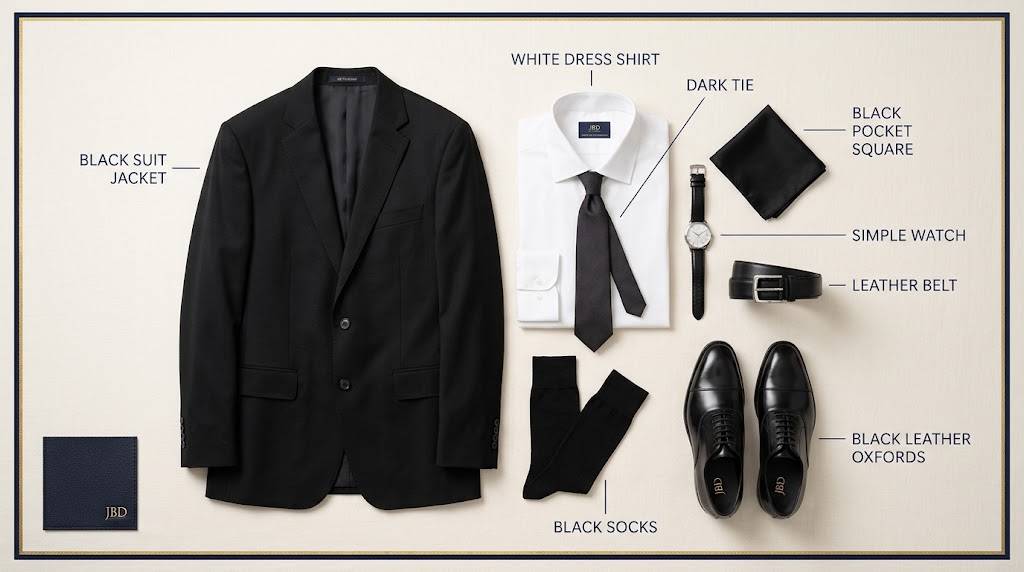
Fit matters. A suit that doesn’t fit well looks hastily chosen. Your shoulders should sit naturally. Sleeves should end at your wrist with a slight bend. The jacket should close comfortably without pulling.
Off-the-rack suits often don’t fit standard body types. If you’re grabbing a suit at the last minute, consider custom tailoring or a suit rental rather than wearing something ill-fitting.
The Dress Shirt
White is standard. A crisp white dress shirt beneath a dark suit is timeless and respectful. Light blue or soft gray work if white isn’t available, but white is the safest choice.
Condition matters: Ensure your shirt is clean, pressed, and in good repair. No wrinkles. No stains. No loose buttons.
The Tie
A tie is expected at formal funerals. Choose:
- Dark solid colors: Black, dark gray, dark navy, dark burgundy
- Subtle patterns: Thin stripes or small geometric patterns (only if absolutely necessary)
- Avoid: Bright colors, novelty ties, overly textured fabrics
Pro Tip:
If you don’t own an appropriate tie, most department stores carry dark solid ties for under $20. Borrow one if needed.
Shoes
Black leather dress shoes are the standard. Keep them clean and polished.
- Oxfords (lace-up)
- Loafers
- Dress shoes with minimal ornamentation
What to avoid: Sneakers, athletic shoes, sandals, boots, scuffed or dirty shoes.
Socks
Black or dark gray socks that reach your calf. Avoid novelty socks, bright colors, or patterns. When you sit, your sock should be visible—make sure it’s appropriate.
Accessories
- Belt: Black leather, matching your shoes. Essential if wearing dress pants.
- Watch: Simple, understated. A classic leather-strap or metal watch is appropriate. Avoid large sports watches or overly flashy styles.
- Pocket Square: Optional but shows intention. Use white, black, or a subtle pattern that coordinates with your tie.
- Jewelry: Keep it minimal. A wedding ring is fine. Avoid chains, bracelets, or multiple rings.
Do’s and Don’ts of Funeral Attire
✓ DO: Choose Dark, Muted Colors
Black, charcoal, or dark navy communicate respect. Pair with subdued accessories. Keep the focus on honoring the deceased, not your appearance.
✗ DON’T: Wear Bright or Casual Colors
Red, orange, bright blue, or casual pastels read as celebratory. Save colorful outfits for other occasions. At a funeral, blend in respectfully.
✓ DO: Ensure Your Suit Fits Well
An ill-fitting suit looks hastily chosen. Shoulders, sleeves, and torso should all fit your frame. Get it tailored if needed—a proper fit is worth the investment.
✗ DON’T: Wear Casual Clothing
Jeans, t-shirts, shorts, hoodies, and casual sneakers have no place at a funeral. Even a blazer with jeans falls short of the respect a funeral deserves.
✓ DO: Keep Shoes Clean and Polished
Scuffed, dirty, or worn shoes undermine your entire outfit. Clean leather dress shoes are non-negotiable. A few minutes of polish makes all the difference.
✗ DON’T: Wear Casual Footwear
Sneakers, athletic shoes, sandals, or boots signal disrespect. Black or dark leather dress shoes are the only appropriate choice.
✓ DO: Minimize Accessories
Choose 1-2 quality pieces. A watch and belt are enough. Avoid chains, excessive jewelry, or anything that draws attention.
✗ DON’T: Overdress or Wear a Tuxedo
A tuxedo signals a formal event or celebration—not a funeral. A dark suit is more appropriate and respectful.
What If You Don’t Own a Suit?
If you don’t own a suit and a funeral comes up, you have options:
1. Suit Rental (24-48 Hours)
Rent a suit from a local formalwear shop. Black or charcoal rental suits are affordable and readily available. You’ll get a properly fitted suit without the investment.
2. Buy Off-the-Rack (Same Day Possible)
Department stores like Macy’s, Nordstrom, or Target carry affordable dark suits. Try on multiple sizes and have the store tailor the sleeves and hem while you wait—many stores offer rush tailoring.
3. Borrow from a Friend or Family Member
If the fit is close, borrowing saves time and money. Better a borrowed suit that fits than a rented one that doesn’t.
4. Dress Pants + Blazer Alternative
If a full suit isn’t available, wear dark dress pants with a dark blazer. Pair with a white shirt and dark tie. This isn’t ideal, but it’s better than casual clothing.
5. Custom Suit at Short Notice
JBD Clothiers offers rush tailoring for funeral suits. If you have 5-7 days, we can create a custom suit that fits your body perfectly—no alterations needed later. Custom suits for funerals often feel more dignified than off-the-rack options.
Funeral Etiquette Beyond Attire
What you wear is one part of showing respect. How you behave matters equally.
Arrival & Seating
According to the National Funeral Directors Association, arrive early or on time. Seat yourself in the back or middle sections unless you’re family. Leave front rows for immediate family members.
- During the Service
- Turn off your phone.
- Don’t talk or whisper during the service.
- Stand and sit with the congregation.
- Avoid checking your watch or appearing distracted.
- Expressing Condolences
Be brief and genuine. Say something like: “I’m so sorry for your loss. [Deceased] was a wonderful person. My thoughts are with you.”
A handshake is appropriate for most people. Offer a hug only to close family or friends you know well.
Flowers & Gifts
Send flowers before the service if possible—standing wreaths are traditional. Check the obituary for specific requests, like “donations in lieu of flowers.” Respect the family’s wishes.
The Reception (If Invited)
After the service, stay for the reception if invited. Your presence comforts the family. Keep your remarks sincere and your behavior respectful.
Custom Suits for Funerals: When It Matters
Most men wear a suit only a few times per year—funerals, weddings, job interviews. Off-the-rack suits work for some, but they often miss the mark on fit.
A custom suit tailored to your measurements is different. Every suit is built for your body:
- Shoulders: Cut to your exact shoulder width—no gapping or pulling.
- Sleeves: End at your wrist precisely. No alterations needed.
- Torso: Fit your chest and waist without bunching or tightness.
- Inseam: Tailored to your exact leg length.
At a funeral, a well-fitted suit communicates respect. You’ve taken time to prepare. You honor the deceased through your attention to detail. Custom suits deliver this effect.
Final Thoughts
When you’re grieving, the last thing you want to worry about is what to wear. This guide simplifies that decision. The answer is almost always the same: a dark suit, white shirt, dark tie, black shoes, and minimal accessories.
But remember: What matters most is showing up. Your presence at a funeral—more than what you’re wearing, is what comforts the grieving family. A thoughtfully dressed man in a well-fitting suit simply ensures that your appearance doesn’t distract from that presence.
If you’re unsure about anything, call the funeral home or a family member. They’ll appreciate your thoughtfulness.
GET PERFECTLY FITTED FUNERAL SUITS
A funeral is never the right time to worry about fit. At JBD Clothiers, every custom suit is tailored to your exact measurements—shoulders, sleeves, torso, inseam. No guessing. No alterations. Just perfectly fitted pieces that communicate respect.
Whether you need a suit in a week or have time to prepare, we build each piece to your frame. When you’re grieving, proper fit removes one more thing to stress about.
Frequently Asked Questions
Can I wear dark blue instead of black to a funeral?
Yes, if the suit is dark enough that it appears nearly black. Navy blue that’s clearly blue (not dark) is less ideal but acceptable if it’s your only option. Charcoal or black is always safer.
Is a tuxedo appropriate for a funeral?
No. A tuxedo signals a formal celebration or black-tie event. A dark suit is more respectful and appropriate for a funeral. Save the tuxedo for weddings and galas.
What if the funeral says “casual attire” or “celebration of life”?
Follow the family’s guidance. If they request casual attire, you can wear dark slacks with a sport coat or blazer instead of a full suit. Still avoid jeans, t-shirts, or sneakers—“casual” at a funeral is more conservative than everyday casual.
Do I have to wear a tie?
At formal funerals, a tie is expected. At casual services or celebrations of life, a dress shirt without a tie can work if the obituary indicates informality. When in doubt, wear a tie. It’s easier to remove one than to regret not wearing it.
What if I have a funeral in a week but no suit? Should I rent or buy?
If you’ll need a suit again in the future, consider a custom suit tailored to your measurements. If you’ll rarely wear it, renting is more practical. A custom suit ensures perfect fit and can be worn to any formal occasion later.
Can I wear a three-piece suit with a vest?
Yes. A three-piece suit (suit jacket, vest, trousers) is actually more formal and shows intention. A dark vest with a matching suit and white shirt is entirely appropriate and communicates respect.
What if I’m a large or athletic build and standard suits don’t fit?
This is where custom tailoring makes the biggest difference. Off-the-rack suits are designed for average proportions. If you have a broad chest, large shoulders, or unusual proportions, a custom suit ensures proper fit without alteration struggles.
Should my shoes match my belt?
Yes, ideally. Black shoes with a black belt is the standard. Both should be leather and in good condition. Matching shoes and belt create a cohesive, intentional appearance.