


If you’ve never owned a custom suit, the whole idea can feel a little intimidating — like stepping into a world with its own vocabulary, its own pace, and price tags that seem to come out of nowhere. The truth is far simpler. Once you understand what actually happens at each stage, custom stops feeling like an indulgence and starts feeling like exactly what it is: ordering clothing that’s built to your specifications instead of hoping a rack size works.
You’re Part of a Growing Shift
65% of consumers say they prefer custom-made garments specifically because of better fit, comfort, and style compared to off-the-rack alternatives. — Global Growth Insights, Custom Clothing (Made-to-Measure) Market Report, 2025[source]
Custom shirts and suits alone account for roughly 48% of all custom clothing orders placed by American buyers — the most popular categories by far. — MarketGrowthReports, Custom Made Clothes Market, 2026[source]
If this is your first time going custom, you’re not an outlier. You’re part of a fast-growing group of American men who’ve decided that clothing should be built around them — not the other way around.
Step 1: The Conversation
It starts with a conversation, not a sales pitch. A short discussion about your lifestyle, your work, the events you’re dressing for, and what’s frustrated you about off-the-rack clothing in the past. There’s no obligation at this stage — it’s simply about understanding what you actually need before anyone talks fabric or price.
Step 2: Measurements and Fabric Selection
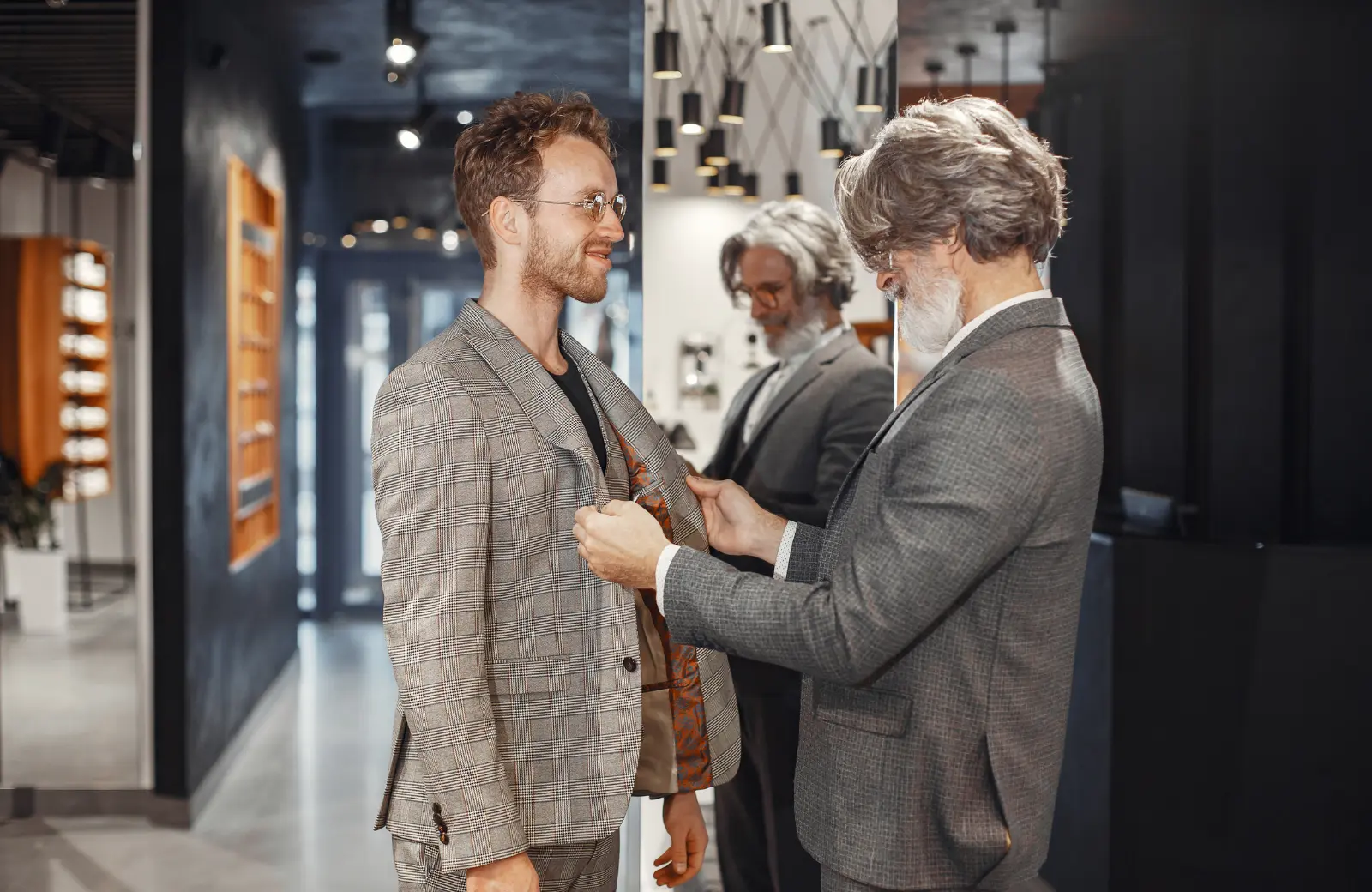
This is where custom becomes tangible. A clothier takes more than 25 individual measurements — shoulder slope, arm pitch, posture, seat shape, and more — capturing details that a size label never could. At the same time, you’ll select fabric from premium mills, choose lining, buttons, stitching details, and silhouette preferences. Every choice is yours, guided by someone who understands how each decision affects the finished garment.
Step 3: Production
Once measurements and fabric are finalized, your garment goes into production — typically a six-to-eight week process using mills like Loro Piana, Ermenegildo Zegna, and Vitale Barberis Canonico. This isn’t an assembly line. It’s closer to a build order, with your specific measurements and fabric choices driving every cut.
Step 4: The Fitting
When your suit arrives, it goes through inspection and a fitting. This is the step most first-time buyers don’t expect — even with precise measurements, a final fitting allows for the small adjustments that make the difference between “very good” and “exactly right.” Sleeve length, trouser break, and overall balance are checked and refined before the suit is considered finished.
What It Actually Costs — and Why
41% of first-time custom garment buyers cite pricing as their main hesitation toward repeat purchases — yet return rates for custom clothing remain lower than for fast fashion, sitting around 11%. — MarketGrowthReports, Custom Made Clothes Market, 2026[source]
It’s a fair concern — custom clothing costs more upfront than a department store suit. But the comparison that matters isn’t sticker price, it’s cost per wear. A custom suit built from premium wool, properly cared for, can be worn for a decade or more without losing its shape. A $400 retail suit that fits poorly and wears out in two years isn’t actually the cheaper option — it just feels that way at checkout.
What Changes After Your First Suit
Most first-time custom clients describe the same moment: putting the finished jacket on and realizing nothing pulls, nothing gaps, nothing needs adjusting. Research on enclothed cognition suggests this isn’t just comfort — clothing that fits with intention measurably changes how confidently and clearly people perform in professional settings.
After that first experience, most clients don’t think of custom as a special occasion purchase anymore. It becomes the default — and the off-the-rack rack starts to look like a compromise they no longer need to make.
Curious what your first custom suit would feel like? Start the conversation at jbdclothiers.com — no pressure, no commitment, just answers.