

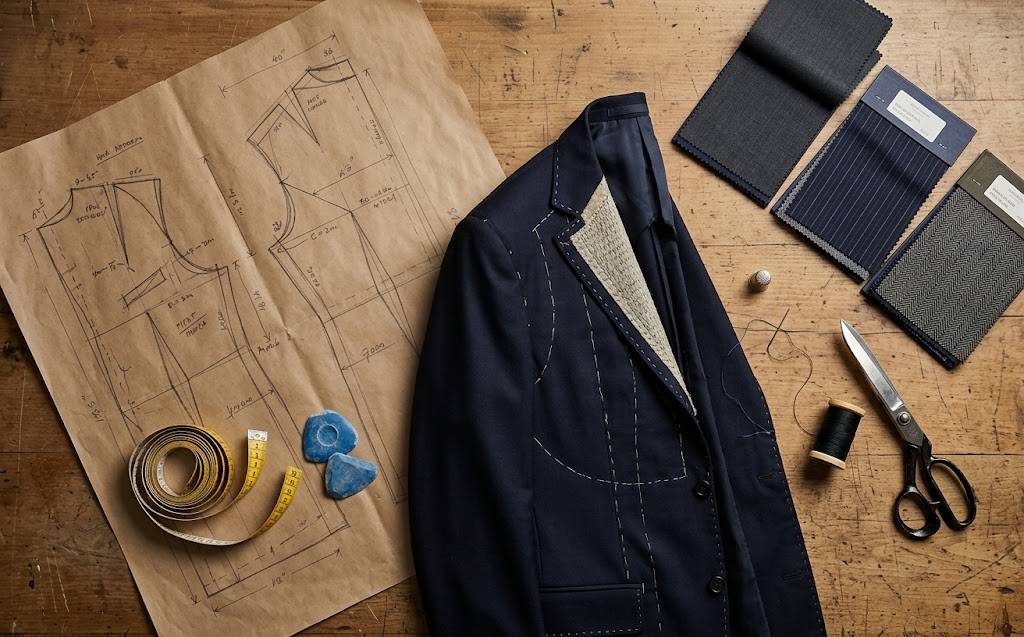
The phrase bespoke suit sits at the absolute pinnacle of menswear. For centuries, it has represented the ultimate intersection of personal identity, craftsmanship, and uncompromised fit. Unlike walking into a department store and pulling a garment off a rack, investing in custom tailoring suits is an immersive collaborative process between client and master tailor.
Understanding the nuance behind what is a bespoke suit requires looking past the marketing jargon often thrown around by modern fashion brands. True bespoke tailoring means a garment is crafted entirely from scratch for one specific individual, starting with an individual paper pattern that will never be used for anyone else.
What Is a Bespoke Suit: The Process and Craftsmanship
The word “bespoke” originates from the old English verb bespeak, meaning to “speak for something” or arrange for something to be made. In the realm of classic tailoring, it denotes a garment built from the ground up.
When you commission a bespoke suit, the journey begins with an extensive consultation. A master cutter takes over two dozen precise measurements of your body, noting posture, shoulder slope, stance, and any asymmetries. From there, a unique paper pattern is drafted by hand.
The Fitting Stages
The defining hallmark of true custom work is the physical fitting process, which typically includes:
- The Basted Fitting (First Fitting): The skeleton of the jacket—rough-cut fabric loosely basted together with white cotton thread—is tried on. The cutter pinches, chalks, and reshapes the drape directly on your body.
- The Forward Fitting (Second Fitting): The lining, sleeves, and collar are added, allowing the tailor to refine balance, armhole comfort, and chest shaping.
- The Final Delivery: After minor hand-finishing, buttonhole stitching, and pressing, the garment is ready.
Bespoke Suit vs. Made to Measure

Navigating the world of custom menswear often brings confusion regarding terminology. The most common point of ambiguity is understanding a bespoke suit vs made to measure, particularly when differentiating between artisan construction and factory-scaled made to measure suits.
While both offer an upgrade from off-the-rack sizing, their construction methods differ fundamentally:
| Feature | Bespoke Suit | Made to Measure (MTM) |
|---|---|---|
| Pattern | Drawn completely from scratch for your unique body. | Uses a pre-existing standard block pattern modified by computer. |
| Fittings | Multiple physical fittings with intermediate basted stages. | Usually one quick fitting with final adjustments done at delivery. |
| Construction | Highly intensive hand-stitching, floating canvas, hand-set sleeves. | Often machine-assembled with semi-industrial fusing or light canvas. |
| Customization | Infinite freedom over styling, pockets, lapel roll, and canvas weight. | Limited to options provided within the brand’s factory template. |
Financial Investment and Value
When considering an investment in high-end menswear, a common question prospective buyers ask is are bespoke suits expensive.
The short answer is yes, they command a significant financial premium. According to global industry research from sector analysis reports on the tailoring and custom clothing market, the custom tailoring sector is expanding steadily, valued at over $57 billion globally with robust multi-year growth projections, driven by a significant consumer pivot away from disposable apparel toward high-heritage, durable garments. A genuine artisan-crafted garment requires anywhere from 50 to 80 hours of meticulous hand labor by skilled artisans, utilizing superior internal components like natural horsehair canvas rather than cheap synthetic fusing. For a deeper look at internal jacket construction, you can explore this technical guide to floating canvas construction.
When evaluating bespoke suit cost, expect prices to start around $3,000 to $5,000 for reputable independent tailors, scaling well past $10,000 on Savile Row depending on the fabric mill chosen. Premier woolen mills renowned for providing luxury bespoke cloth include:
Vitale Barberis Canonico — One of Italy’s oldest fabric mills, famous for classic flannel and super-fine wools.
Scabal — Renowned for high-end suiting fabrics woven in England.
Holland & Sherry — Historic merchant supplying Savile Row with fine Scottish woolens.
While the upfront ticket price is high, the cost-per-wear balances out over decades because a properly constructed garment can last a lifetime with the right care, unlike glued factory suits that break down within a few years.
Modern Accessibility: Bespoke Suits for Men
Historically, commissioning a bespoke garment required traveling to historic tailoring hubs like London’s Savile Row, Naples, or New York City. Today, the landscape has evolved to accommodate global clientele.
Discerning gentlemen looking to buy bespoke suits for men online will find innovative hybrid services. While traditional purists argue that physical visits are irreplaceable, modern bespoke houses utilize digital measurement profiles, traveling master tailors who visit major metropolitan hubs quarterly, or detailed self-measurement kits paired with virtual consultations. This allows Bespoke Suits for Men to be accessible worldwide while maintaining the core tenets of individual pattern drafting and multi-stage construction.
The Final Cut: Investing in Tailoring Excellence
Stepping into the world of custom tailoring transforms how you view clothing. It shifts your wardrobe from disposable fast fashion to an intentional collection of heritage pieces built specifically for your frame. Whether you are dressing for a wedding, an executive boardroom, or simply appreciate the art of slow fashion, choosing a custom path ensures a silhouette that cannot be replicated anywhere else.
Schedule Free Consultation Now
Frequently Asked Questions
How long does it take to make a bespoke suit?
A traditional bespoke suit typically takes between 8 to 12 weeks from the initial consultation to final delivery. This timeline allows for hand-drafting the individual paper pattern, completing 2 to 3 physical fittings, and completing over 50 hours of detailed hand-stitching.
How many fittings are required for a bespoke suit?
For your first commission with a tailor, expect a minimum of three fittings: the basted fitting (rough canvas shell), the forward fitting (partially assembled jacket), and the final fitting for micro-adjustments. Once a tailor has your personal pattern perfected on file, subsequent suits usually require fewer intermediate fittings.
What is the difference between custom suits and bespoke suits?
While the term “custom suits” is an umbrella phrase that includes both made-to-measure and bespoke garments, true bespoke suits are cut from an individual paper pattern drafted completely from scratch. Made-to-measure custom garments adapt a pre-existing factory template to fit your measurements.
Can you buy a genuine bespoke suit online?
Yes, modern tailoring houses offer hybrid digital programs allowing clients to buy bespoke suits for men online. These services combine remote digital measurements, 3D body scans, or traveling master tailors with traditional hand-cut individual paper patterns and bespoke construction techniques.